
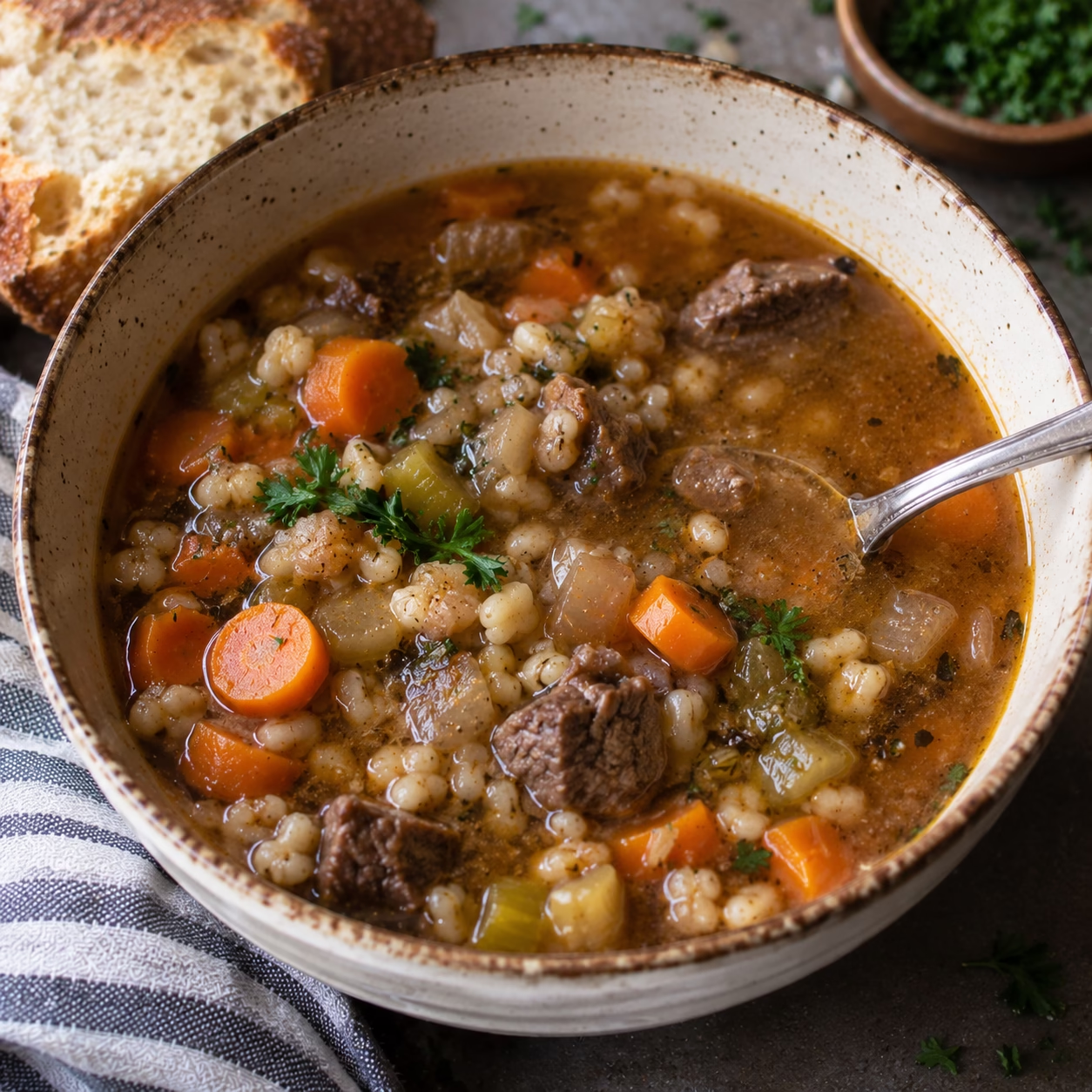
Beef barley soup is the kind of meal that makes a cold evening feel a little better. Tender pieces of beef, pearl barley, carrots, celery, and onion simmer together in a savory beef broth until the barley is plump and the beef is tender.
The beauty of this soup is that you don’t need complicated techniques. Brown the beef well, build the soup around the browned bits left in the pot, then let everything simmer gently until the flavors come together. The barley releases starch as it cooks, giving the broth a naturally hearty texture without needing flour or cornstarch.
This recipe uses chuck or stewing beef, pearl barley, classic soup vegetables, tomato paste, thyme, and bay leaves. It’s substantial enough to be dinner on its own, especially with some crusty bread on the side.
If you love hearty beef soups, our Beef and Barley Stew is another great option when you want something thicker and more stew-like.
Quick Answer
To make beef barley soup, sear seasoned beef chuck in a Dutch oven, then sauté onion, carrots, celery, garlic, and tomato paste in the same pot. Add beef broth and return the beef to the pot, then simmer until the beef is beginning to become tender. Stir in rinsed pearl barley and continue simmering until both the beef and barley are tender. Finish with fresh parsley and adjust the seasoning to taste.
❤️ Why You’ll Love This Recipe
- One-pot comfort food with the beef, vegetables, barley, and broth all coming together in one pot.
- Naturally hearty and thick because pearl barley releases starch as it cooks.
- Deep savory flavor from properly browned beef, tomato paste, aromatics, and beef broth.
- Budget-friendly because an economical cut like chuck becomes tender during a slow simmer.
- Excellent for leftovers and easy to portion for lunches or future dinners.
Ingredients You’ll Need

Beef and Barley
- 1½ pounds beef chuck or stewing beef, cut into 1-inch cubes
- 1 cup pearl barley, rinsed
Vegetables and Aromatics
- 1 large yellow onion, diced
- 2 large carrots, peeled and sliced
- 2 celery stalks, sliced
- 3 cloves garlic, minced
- 2 tablespoons tomato paste
Broth and Seasonings
- 8 cups low-sodium beef broth
- 2 bay leaves
- 1 teaspoon dried thyme
- 1 tablespoon olive oil
- 1 teaspoon kosher salt, plus more to taste
- ½ teaspoon black pepper
- Fresh parsley, chopped, for serving
Ingredient Notes
Beef chuck: Chuck is the best choice when you want beef that becomes tender and flavorful during a longer simmer. Stewing beef works too. Comparable recipes from The Kitchn, King Arthur Baking, and Food Network all use chuck or another stew-friendly cut.
Pearl barley: Pearl barley is the easiest choice for this recipe because it cooks faster than hulled barley and develops the tender-but-chewy texture you want in soup.
Beef broth: Low-sodium broth gives you more control over the final salt level. Since there are 8 cups of broth in the pot, its flavor matters.
Tomato paste: You don’t need a lot. Two tablespoons add depth and help give the broth a richer color and savory backbone.
Equipment You’ll Need
- 6-quart Dutch oven or heavy-bottomed soup pot
- Wooden spoon or heat-resistant spatula
- Sharp chef’s knife
- Cutting board
- Measuring cups and spoons
- Ladle
A heavy pot is useful because it holds heat well while you’re searing the beef and later maintains a steady simmer.
How to Make Beef Barley Soup
Step 1: Sear the Beef
Pat the beef cubes dry with paper towels. Season them with salt and black pepper.
Heat the olive oil in a large Dutch oven over medium-high heat until shimmering.
Add the beef in a single layer, working in batches if necessary. Don’t overcrowd the pot or the beef will release too much moisture and steam instead of developing a good brown crust.
Sear the beef for about 4–5 minutes per batch, turning the pieces so several sides become deeply browned. Transfer the beef to a plate and leave the browned bits in the bottom of the pot.

Step 2: Build the Aromatics
Reduce the heat to medium.
Add the onion, carrots, and celery to the same pot. Cook for about 5–6 minutes, stirring occasionally, until the onion softens and the vegetables begin to pick up some color.
Add the minced garlic and tomato paste.
Cook for another 1–2 minutes, stirring frequently, until the tomato paste darkens slightly and the garlic becomes fragrant.
Step 3: Deglaze the Pot
Pour in about ½ cup of the beef broth.
Use a wooden spoon to scrape the browned bits from the bottom of the pot. Those bits are concentrated flavor, so take your time loosening them.
Return the browned beef and any juices from the plate to the pot.
Pour in the remaining beef broth and add the bay leaves, thyme, remaining salt, and black pepper.
Step 4: Simmer the Beef

Bring the soup to a gentle boil, then immediately reduce the heat to low.
Partially cover the pot and let the soup simmer for about 45–50 minutes.
Check the beef toward the end of this stage. It doesn’t need to be completely falling apart yet, but it should be noticeably more tender and easy to pierce with a fork.
If your beef is still quite firm, give it another 10–15 minutes before adding the barley.
This extra flexibility is important because chuck and stewing beef can vary in tenderness. Comparable recipes range from roughly 45 minutes to an hour or more before the barley is added.
Step 5: Add the Barley
Stir the rinsed pearl barley into the simmering soup.
Bring it back to a gentle simmer, then partially cover the pot again.
Cook for another 30–40 minutes, stirring occasionally so the barley doesn’t settle and stick to the bottom.
The barley should be plump and tender with a little chew in the center, while the beef should be fork-tender.
If the soup becomes thicker than you like, add a little hot water or beef broth.
Pearl barley commonly takes around 30–40 minutes to cook in soup, although the exact time depends on the brand and cooking temperature.
Step 6: Finish and Serve
Remove the bay leaves.

Taste the soup and adjust the salt and black pepper as needed.
If the broth is thicker than you’d like, loosen it with a splash of hot broth or water.
Ladle the soup into bowls and finish with freshly chopped parsley.
Serve hot with crusty bread if you like.
Tips for the Best Beef Barley Soup
Dry the beef before searing. Moisture on the surface makes it harder to get the deep browning that gives the soup its flavor.
Don’t crowd the pot. If all the beef doesn’t fit comfortably in one layer, brown it in batches.
Don’t waste the browned bits. Deglazing the pot with broth picks up the flavorful fond left behind after searing.
Be flexible with the simmer time. The beef is done when it’s tender, not simply because a timer says it should be done.
Use pearl barley. It gives you a reliable cooking time and a pleasantly chewy texture.
Watch the thickness. Barley continues absorbing broth as the soup sits, so leftovers will usually be thicker than the freshly cooked soup.
Taste before adding more salt. Beef broth and tomato paste can vary significantly in sodium.
Storage & Make-Ahead
Refrigerator: Transfer cooled soup to airtight containers and refrigerate for 3–4 days. USDA guidance recommends using refrigerated soups and stews within 3–4 days.
Freezer: Freeze in airtight freezer-safe containers for about 2–3 months for best quality. Leave some room at the top because the soup expands as it freezes. USDA lists 2–3 months for frozen leftovers, while noting that frozen food kept continuously at 0°F remains safe but can lose quality over time.
Thawing: Thaw overnight in the refrigerator, or reheat directly from frozen in a saucepan over low heat, adding some broth or water as needed.
Reheating: Warm gently on the stovetop, stirring occasionally. If using a microwave, heat in short intervals and stir between them.
Make-ahead: This soup can be made a day ahead. The barley will continue absorbing broth overnight, so add a splash of water or beef broth when reheating if necessary.
Variations
Gluten-Free Beef Soup
Barley contains gluten, so it cannot simply be labeled gluten-free. Replace the barley with a gluten-free grain such as certified gluten-free brown rice or sorghum, and make sure your broth and other packaged ingredients are labeled gluten-free.
The cooking time will need to be adjusted based on the grain you choose.
Lower-Sodium Version
Use low-sodium beef broth and reduce the added salt. Taste the soup only after the broth and barley have cooked before deciding whether it needs more seasoning.
Mushroom Beef Barley Soup
Add 8 ounces of sliced mushrooms with the onion, carrots, and celery. Cook them until they release their moisture and begin to brown before adding the tomato paste.
Extra Vegetable Version
Add diced potatoes, mushrooms, parsnips, or additional carrots and celery. Keep the pieces relatively small so they cook evenly with the rest of the soup.
For another classic combination of beef and vegetables, try our Beef Stew With Carrots and Potatoes.
Add Greens
Stir in a couple of handfuls of chopped kale or spinach during the final few minutes of cooking. The greens will wilt into the hot broth without needing a long cooking time.
For another vegetable-packed cold-weather soup, try our Winter Minestrone Soup.
Slow Cooker Beef Barley Soup
Brown the beef first and sauté the vegetables and tomato paste in the same pan. Transfer everything to a slow cooker with the broth, barley, and seasonings.
Cook on low for about 7–8 hours, or until the beef is tender and the barley is cooked. Slow-cooker versions vary, but recipes using similar quantities commonly fall in this range.
Common Mistakes to Avoid
Skipping the sear: Adding raw beef directly to the broth will still produce soup, but you lose much of the roasted flavor developed by browning.
Crowding the beef: Too many pieces in the pot at once trap moisture and prevent proper browning.
Adding the barley too early: Pearl barley doesn’t need as much time as the beef chuck. Adding it after the beef has had time to tenderize helps prevent mushy barley.
Boiling aggressively: A hard boil can make the beef tougher and cause the broth to reduce too quickly. Keep the soup at a gentle simmer.
Ignoring the soup’s thickness: Barley absorbs liquid as it cooks and continues doing so after cooking. Keep extra broth nearby so you can adjust the consistency.
Over-salting early: Broth reduces as the soup cooks, concentrating its salt. Season gradually and taste again at the end.
FAQ
Can I use quick-cooking barley instead of pearl barley?
Yes, but don’t use the same cooking time. Quick-cooking barley cooks much faster, so add it toward the end of cooking according to the package directions.
Do I need to soak pearl barley before making soup?
No. Pearl barley does not require soaking before adding it to soup. Rinsing it under cool water before cooking is sufficient.
Can I use hulled barley?
Yes, but expect a longer cooking time. Hulled barley retains more of the outer grain and takes longer to become tender than pearl barley. Start checking it well beyond the cooking time used for pearl barley rather than assuming an additional 20 minutes will always be enough.
Why is my beef still tough?
Beef chuck becomes tender through time and gentle cooking. If the meat is still tough, continue simmering rather than turning up the heat. The exact cooking time can vary depending on the cut, cube size, and how steadily your pot is simmering.
Why is my beef barley soup too thick?
Barley continues absorbing liquid as the soup cools and sits. Stir in hot beef broth or water a little at a time until the soup reaches the consistency you want.
Can I freeze beef barley soup?
Yes. Portion the cooled soup into freezer-safe containers and freeze for about 2–3 months for best quality. The barley may soften slightly after freezing and thawing, but the soup remains a good freezer meal. USDA guidance lists 2–3 months for frozen leftovers.
How long does beef barley soup last in the fridge?
Keep it refrigerated in airtight containers for 3–4 days. Cool and refrigerate leftovers promptly rather than leaving a large pot sitting out for an extended period.
Can I make beef barley soup in an Instant Pot?
Yes, but the pressure-cooking method should be different from the stovetop version.
For a tested approach, brown the beef and sauté the aromatics using the sauté function, then add the broth, beef, barley, and seasonings. Pressure cook on high for about 20 minutes, followed by a 20-minute natural release.
Because pressure cookers and ingredient sizes vary, check the beef and barley before serving and add additional cooking time if needed.
What cut of beef is best for beef barley soup?
Beef chuck is the best all-around choice because it contains connective tissue that becomes tender during a long, gentle simmer. Stewing beef is also a practical option. The Kitchn, King Arthur Baking, and other tested recipes use chuck or stew-friendly cuts for this style of soup.
Is beef barley soup healthy?
It can be part of a balanced meal because it combines beef, vegetables, and a whole grain. The nutritional profile will depend heavily on the cut of beef, amount of barley, broth, and serving size, so it’s better not to attach a fixed calorie or protein claim without calculating the exact recipe.
More Soup Recipes You’ll Love
- Italian Penicillin Soup
- Creamy Chicken Noodle Soup
- White Bean Soup With Bacon
- Beef Stew With Carrots and Potatoes
- Beef and Barley Stew
- Winter Minestrone Soup
- Creamy Mushroom Soup
Conclusion
Beef barley soup doesn’t need much to be excellent. Brown the beef properly, take advantage of those flavorful browned bits, let the chuck simmer gently until tender, and give the pearl barley enough time to become plump and chewy.
The biggest thing to remember is that the pot is your timer, not the other way around. Beef cuts vary, so use tenderness as your guide. If the beef needs another 10 minutes, give it another 10 minutes. If the soup becomes too thick from the barley, loosen it with a little hot broth.
Make a pot when you have a chilly evening ahead, serve it with crusty bread, and save the leftovers for an easy lunch the next day.
Beef Barley Soup
Equipment
- 6-quart Dutch oven or heavy-bottomed soup pot
- Wooden spoon
- Chef’s knife
- * Cutting board
- * Measuring cups and spoons
- Ladle
Ingredients
- 1½ pounds beef chuck or stewing beef cut into 1-inch cubes
- 1 cup pearl barley rinsed
- 1 large yellow onion diced
- 2 large carrots peeled and sliced
- 2 celery stalks sliced
- 3 garlic cloves minced
- 2 tablespoons tomato paste
- 8 cups low-sodium beef broth
- 2 bay leaves
- 1 teaspoon dried thyme
- 1 tablespoon olive oil
- 1 teaspoon kosher salt plus more to taste
- ½ teaspoon black pepper
- Fresh parsley chopped, for garnish
Instructions
- Pat the beef dry and season with salt and pepper.
- Heat olive oil in a Dutch oven over medium-high heat. Sear the beef in batches until deeply browned. Transfer to a plate.
- Reduce heat to medium. Add onion, carrots, and celery and cook for 5–6 minutes until softened.
- Add garlic and tomato paste. Cook for 1–2 minutes.
- Pour in ½ cup beef broth and scrape the browned bits from the bottom of the pot.
- Return the beef and its juices to the pot. Add remaining broth, bay leaves, thyme, remaining salt, and pepper.
- Bring to a gentle boil, reduce heat, partially cover, and simmer for 45–50 minutes, or until the beef is beginning to become tender.
- Stir in rinsed pearl barley.
- Continue simmering partially covered for 30–40 minutes, stirring occasionally, until the barley is tender and the beef is fork-tender.
- Remove the bay leaves. Taste and adjust seasoning.
- Add additional broth or water if the soup is too thick.
- Serve hot with fresh parsley.
Notes


