
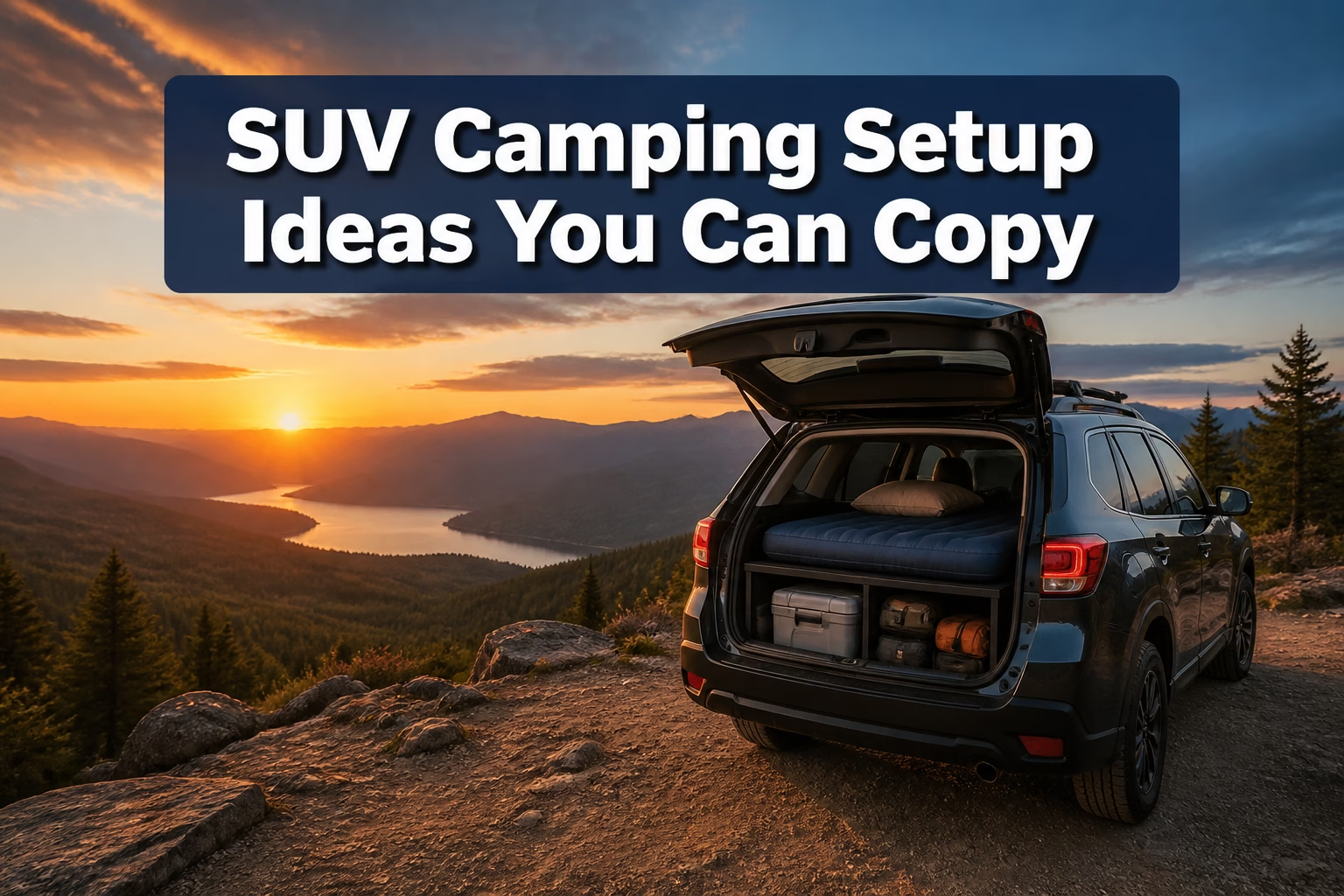
Modern SUV camping setups transform your daily driver into a functional basecamp with a vehicle-specific air mattress foundation, a portable power station, a 12V cooler, and an optional SUV tent attachment. Mid-size or larger SUVs (like the Honda Passport, Hyundai Palisade, or Subaru Ascent) work best because they provide flat sleeping surfaces when seats fold down, eliminating expensive rooftop tents or van conversions while delivering comfortable multi-day camping capability.
What Makes an SUV Good for Camping Setups?
The best camping SUVs combine flat folding rear seats, adequate cargo length (at least 72 inches), and built-in power outlets. Mid-size two-row SUVs like the Nissan Murano, Honda Passport, or Volkswagen Atlas Cross Sport represent the practical minimum, though larger three-row models such as the Hyundai Palisade, Kia Telluride, or Subaru Ascent offer better room to stretch out comfortably.
Critical verification step: Before departing for your camping trip, fold all rear seats completely flat and measure the floor surface. If seats don’t fold flat, your mattress will rest at an uncomfortable angle that disrupts sleep quality.
Why size matters:
- Compact SUVs technically work, but don’t offer sufficient room for most adults to stretch out
- Mid-size models provide the sweet spot between daily drivability and camping comfort
- Three-row SUVs deliver extra space for gear storage when second-row seats stay upright during travel
- The Chrysler Pacifica minivan with removable second-row seats also creates excellent flat sleeping surfaces
Common mistake: Many first-time SUV campers underestimate how much space they’ll actually need. I learned this the hard way during a weekend trip in a compact crossover—my feet pressed against the rear hatch all night, and I woke up with cramped legs.
How Do You Build the Foundation for SUV Camping Setup Ideas You Can Copy?

Start with a vehicle-specific mattress from brands like Luno, designed to fit your exact SUV model’s cargo dimensions and contours. Pair this with an electric air pump (12-volt or household plug versions beat manual pumps) and keep a vinyl patch kit handy for emergency repairs.
Foundation setup process:
- Verify flat floor: Fold all rear seats completely flat and remove any cargo covers or panels that create uneven surfaces
- Place mattress base: Position your deflated vehicle-specific mattress in the cargo area, ensuring proper alignment with seat backs
- Inflate to firmness: Use your electric pump (many SUVs have 12-volt outlets in cargo areas) to inflate the mattress to your preferred firmness level
- Add bedding layers: Top with sleeping bags, blankets, or regular bedding, depending on season and temperature
Power considerations: Check if your SUV’s 12-volt outlets remain powered when the engine is off. Some vehicles require the ignition in “accessory” mode, which can drain your battery overnight. If this is the case, invest in a portable power station instead.
Efficient packing transitions: When you need second-row seats upright during driving, deflate your mattress completely and fold it to fit in the cargo area with bedding stored in the middle. This protects the mattress from damage and saves setup time when you arrive at camp.
For more outdoor adventure preparation, check out our complete camping checklist for beginners.
What Power Solutions Work Best for SUV Camping?
A portable power station with at least 1,000Wh capacity powers essential camping equipment without running your vehicle’s engine continuously. As of March 2026, an Anker Solix 1,024Wh Power Station can run a 12V cooler all weekend and charge multiple devices, with quick recharge capability from your car’s V2L port if needed.
Power station advantages:
- Run 12-volt coolers continuously without ice or ice packs
- Power induction cooktops for hot meals without propane
- Charge phones, tablets, cameras, and other USB devices
- Operate LED lighting inside and outside your vehicle
- Avoid draining your car battery or running the engine overnight
Hybrid and EV advantage in 2026: Hybrid and electric vehicles offer built-in power infrastructure through V2L (Vehicle-to-Load) ports that eliminate the need to run engines continuously. You can power coolers, lights, and charging devices with greater efficiency than traditional gas vehicles.
Choose your power source if:
- Built-in outlets only: Your trips are short (1-2 nights), you have minimal power needs, and your vehicle outlets stay powered when off
- Portable power station: You camp for extended periods, need to power coolers or cooking equipment, or want to avoid draining your car battery
- Hybrid/EV V2L: You own a 2026 hybrid or electric vehicle with Vehicle-to-Load capability and want maximum efficiency
I switched to a portable power station after draining my car battery on my third camping trip. The peace of mind knowing I won’t need a jump-start in the morning is worth every penny.
What Cooking and Food Storage Setup Should You Copy?

Replace traditional coolers and camp stoves with a 12-volt electric cooler and induction cooktop powered by your portable power station. This eliminates ice management, prevents wet food storage problems, and enables hot meals without propane or fire restrictions.
Modern cooking setup:
- 12V electric cooler: Maintains consistent refrigeration temperatures without ice, preventing the wet/sweaty problem of traditional coolers while reducing power station strain during extended trips
- Induction cooktop: Portable single or dual-burner units powered through your power station enable cooking with induction-capable cookware
- Electric kettle: Quick-boil capability for coffee, tea, instant meals, and hot water needs
- Compact cookware: Nesting pots and pans designed for induction cooking save space
Food storage strategy:
- Pack perishables in your 12V cooler, organized in clear containers for easy access
- Store dry goods and snacks in collapsible bins that fit in unused spaces
- Keep cooking utensils, plates, and cutlery in dedicated organizers
- Position your cooler where it’s accessible without unpacking your entire setup
Budget-friendly alternative: If you’re not ready to invest in electric cooling, use a high-quality traditional cooler with block ice (lasts longer than cubed) and pre-chill everything before packing. Position the cooler in shade and open it minimally to extend ice life.
For meal inspiration beyond camping, explore our collection of fun outdoor activities.
Which SUV Tent Attachments Are Worth Copying in 2026?

Five popular SUV tent models dominate 2026 camping setups: JOYTUTUS SUV Tent with Rainfly (waterproof and spacious), Qualencey Dual Mode SUV Tent (party and privacy modes), JOYTUTUS Dual-Use tent with movie screen feature, TIMBER RIDGE SUV Tent with screen porch, and Niphean Inflatable SUV Tent with 2-minute setup capability.
SUV tent benefits:
- Double your usable space by creating a covered outdoor area
- Add privacy for changing clothes or storing gear
- Protect from insects while maintaining airflow
- Create a shaded cooking and dining area
- Some models include movie screen features for outdoor entertainment
Selection criteria:
| Feature | Why It Matters | Look For |
|---|---|---|
| Setup time | Faster setup means more camping, less work | 5 minutes or less, color-coded poles |
| Waterproofing | Keeps you dry during unexpected rain | 2,000mm+ rating, sealed seams, rainfly |
| Attachment method | Secure connection to vehicle | Universal straps, multiple attachment points |
| Ventilation | Prevents condensation and stuffiness | Mesh panels, adjustable vents |
| Floor material | Protects from ground moisture | Bathtub-style floor, durable fabric |
Common mistake: Buying a tent without verifying it fits your specific SUV model. Measure your vehicle’s rear opening height and width, then compare against the tent specifications before purchasing.
I initially bought a generic SUV tent that didn’t seal properly against my vehicle, creating a gap that let in mosquitoes all night. Investing in a model specifically designed for my SUV’s dimensions solved the problem completely.
For more outdoor setup inspiration, browse our cute campsite setup ideas.
How Do You Add Comfort and Organization to Your SUV Camping Setup?
After establishing your mattress foundation, build out your rig with creature comforts, including airflow solutions, privacy curtains, and storage organizers. This three-step accessorization strategy transforms a basic sleep space into a comfortable basecamp.
Airflow and ventilation:
- Battery-powered fans clipped to grab handles or mounted on windows
- Window screens that allow fresh air while keeping insects out
- Crack windows slightly with rain guards to prevent condensation buildup
- Position your SUV to catch prevailing breezes when possible
Privacy solutions:
- Custom-fit window covers or universal privacy curtains
- Reflective sunshades that also provide insulation
- Magnetic or suction-cup-mounted fabric panels
- Tinted window film (check local regulations first)
Storage organization:
- Hanging organizers attached to headrests for small items
- Collapsible bins for clothing and gear
- Roof-mounted cargo boxes for bulky equipment
- Under-mattress storage for items you won’t need at night
Lighting options:
- LED strip lights powered by USB or your power station
- Battery-powered lanterns with adjustable brightness
- Headlamps for hands-free task lighting
- Magnetic work lights that attach to vehicle surfaces
Choose your comfort level if:
- Minimalist: You’re camping in mild weather, staying 1-2 nights, and prioritizing simplicity—stick with mattress, bedding, and basic privacy
- Standard comfort: You want 3-4 night capability with better organization—add fans, storage solutions, and improved lighting
- Maximum comfort: You’re planning extended trips or camping in challenging weather—invest in full privacy curtains, multiple power sources, and comprehensive storage systems
What Are the Best SUV Camping Setup Ideas You Can Copy for Different Seasons?

Adapt your SUV camping setup for seasonal conditions by adjusting insulation, ventilation, and gear priorities. Summer setups prioritize airflow and sun protection, while winter camping requires insulation and heating solutions.
Summer setup priorities:
- Maximum ventilation with all windows cracked and fans running
- Reflective window covers to block heat during the day
- Lighter bedding and moisture-wicking sheets
- Park in shade whenever possible
- Extra water storage for hydration needs
Spring and fall moderate weather:
- Balanced ventilation with adjustable window covers
- Medium-weight sleeping bags or comforters
- Rain preparation with waterproof gear storage
- Flexible layering options for temperature swings
- Hot beverage capability for cool mornings
Winter camping considerations:
- Insulated window covers on all surfaces
- Cold-weather sleeping bags rated for expected temperatures
- Moisture management to prevent condensation
- Emergency heating options (properly ventilated only)
- Extra battery capacity as the cold reduces power efficiency
Common mistake: Underestimating nighttime temperature drops, especially in spring and fall. I once camped in 70-degree weather during the day, only to wake up shivering at 3 a.m. when temperatures plummeted to 40 degrees. Always check nighttime lows and pack accordingly.
For seasonal outdoor activities beyond camping, explore our summer activities guide.
How Much Does a Complete SUV Camping Setup Cost?
A functional SUV camping setup ranges from $300 for basic essentials to $1,500+ for premium gear with all accessories. This remains significantly cheaper than rooftop tents ($2,000-4,000) or van conversions ($5,000-50,000+), while using your existing daily-driver vehicle.
Budget breakdown by tier:
Basic setup ($300-500):
- Generic air mattress: $50-100
- Manual air pump: $15-25
- Basic bedding: $50-100
- Traditional cooler: $30-80
- LED lantern: $20-40
- Window shades: $25-50
- Storage bins: $30-60
Standard setup ($800-1,200):
- Vehicle-specific mattress: $200-350
- Electric air pump: $40-80
- Quality sleeping bags: $100-200
- 12V electric cooler: $150-300
- Portable power station (500Wh): $200-400
- Privacy curtains: $60-120
- Hanging organizers: $30-60
- LED lighting kit: $40-80
Premium setup ($1,500-2,500+):
- Premium vehicle mattress: $350-500
- Large power station (1,000Wh+): $600-1,200
- SUV tent attachment: $200-400
- Induction cooktop: $60-120
- High-capacity 12V cooler: $400-800
- Complete privacy system: $150-250
- Comprehensive storage: $100-200
- Advanced lighting: $80-150
Money-saving strategy: Start with the basic tier and upgrade individual components as you identify what matters most for your camping style. I began with a $60 air mattress and traditional cooler, then gradually invested in better gear as I discovered my preferences through actual camping experience.
What Common Mistakes Should You Avoid When Setting Up SUV Camping?

The most frequent SUV camping mistakes include failing to verify that seats fold flat, overloading the vehicle with unnecessary gear, neglecting to test the setup before departure, and underestimating power needs for multi-day trips.
Critical mistakes to avoid:
- Not testing your setup at home: Spend a night in your driveway testing your complete setup before heading to remote locations
- Overpacking gear: Bring only essentials for your first few trips, then add items as you identify actual needs
- Ignoring weight distribution: Heavy items should sit low and centered to maintain vehicle handling and fuel efficiency
- Forgetting backup plans: Always have contingency options for power, cooking, and shelter in case primary systems fail
- Skipping vehicle maintenance: Check tire pressure, fluid levels, and emergency equipment before every camping trip
- Neglecting security: Keep valuables out of sight and use vehicle security systems in unfamiliar areas
- Improper food storage: In bear country, never store food inside your vehicle overnight—use proper bear-proof containers
Edge case considerations:
- Altitude camping: Power stations and coolers work less efficiently at high elevations
- Extreme heat: Batteries and electronics can overheat in direct sun—provide shade and ventilation
- Extended remote trips: Bring redundant systems for critical equipment like lighting and cooking
- Pet camping: Factor in additional space, ventilation, and temperature control for animal companions
I once drove three hours to a campsite only to discover my supposedly “universal” mattress didn’t fit my SUV’s cargo area properly, leaving a 6-inch gap that made sleeping uncomfortable. Testing at home would have saved that entire trip.
Conclusion
SUV camping setups offer an accessible, budget-friendly entry into vehicle-based adventure that requires no permanent modifications to your daily driver. By starting with a vehicle-specific mattress foundation, adding a portable power station for modern conveniences, and incorporating smart storage solutions, you’ll create a comfortable basecamp that deploys in minutes and rivals traditional camping comfort.
The key is starting simple and building your setup through actual camping experience. Begin with the essentials—mattress, bedding, basic power, and food storage—then add comfort features as you discover what matters most for your camping style.
Modern SUV camping proves you don’t need expensive rooftop tents or van conversions to enjoy comfortable outdoor adventures. Your existing vehicle, combined with smart gear choices and these proven setup ideas, transforms into a capable camping platform ready for weekend getaways and extended road trips alike.
For more inspiration on creating memorable outdoor experiences, explore our guide to cute campsite setups and discover additional camping activities to enhance your adventures.
References
[1] The Top 7 Vehicles For Car Camping In 2026 – https://lunolife.com/blogs/journal/the-top-7-vehicles-for-car-camping-in-2026
[2] How To Comfortably Camp In An SUV – https://roadtripper.ca/how-to-comfortably-camp-in-an-suv/


