Making new friends as an adult can feel like trying to solve a puzzle with missing pieces. You see others effortlessly chatting and laughing together, while you wonder how they make it look so simple. The truth is, friendship doesn’t have to be complicated or intimidating. With the right mindset and practical strategies, anyone can expand their social circle and build meaningful connections that enrich their life.
Whether you’ve moved to a new city, changed jobs, or simply want to broaden your social horizons, this comprehensive guide will equip you with proven techniques to make new friends naturally and authentically. From overcoming social anxiety to finding your tribe, you’ll discover actionable steps that work in real-world situations.
Table of Contents
Key Takeaways
• Start with shared interests – Join activities and groups where you naturally connect with like-minded people
• Practice the art of conversation – Learn to ask engaging questions and be genuinely interested in others
• Be consistent and patient – Building friendships takes time, so show up regularly and nurture connections gradually
• Focus on giving rather than receiving – Offer value, support, and genuine interest before expecting friendship in return
• Step outside your comfort zone – Growth happens when you challenge yourself to try new social situations
Understanding the Friendship Challenge in Modern Times
Making friends as an adult presents unique challenges that didn’t exist in childhood. Unlike school environments where friendships formed naturally through proximity and shared experiences, adult life requires more intentional effort. Work schedules, family responsibilities, and established routines can create barriers to meeting new people.
Common obstacles include:
- Limited time and energy after work commitments
- Fear of rejection or judgment
- Uncertainty about where to meet potential friends
- Rusty social skills from lack of practice
- High expectations or perfectionism
The good news? These challenges are entirely surmountable with the right approach and mindset.
Start with Self-Reflection and Preparation
Before diving into social situations, take time to understand what you’re looking for in friendships. This self-awareness will help you identify compatible people and present your authentic self confidently.
Define Your Friendship Goals
Ask yourself these important questions:
- What qualities do you value most in friends?
- What type of activities would you enjoy sharing?
- How much time can you realistically dedicate to new friendships?
- Are you looking for deep connections or casual acquaintances?
Work on Your Mindset
Shift from scarcity to abundance thinking. Instead of desperately seeking friends, approach social interactions with curiosity and openness. This mindset makes you more attractive to others and reduces pressure on individual encounters.
Consider incorporating mindful living practices into your daily routine. When you live with intention and self-awareness, you naturally become more confident and authentic in social situations.
Identify Where Your People Gather
The secret to making friends easily lies in finding environments where you naturally belong. Instead of forcing connections in random places, strategically choose activities and locations aligned with your interests and values.
Interest-Based Communities
Hobby groups and classes offer perfect friendship opportunities because you already share common ground. Consider:
- Creative pursuits: Art classes, writing groups, photography clubs
- Physical activities: Hiking groups, yoga studios, sports leagues
- Learning opportunities: Language classes, book clubs, professional workshops
- Volunteer organizations: Animal shelters, community gardens, charity events
Professional Networking
Don’t overlook workplace connections and professional associations. Colleagues who share your career interests often make excellent friends outside of work.
Digital-to-Real-World Connections
Use apps and online platforms as stepping stones to in-person meetings:
- Meetup.com: Find local groups based on specific interests
- Facebook groups: Join community-specific pages in your area
- Bumble BFF: Designed specifically for platonic friendships
- Nextdoor: Connect with neighbors and local community members
Master the Art of Conversation
Great conversations are the foundation of lasting friendships. Learning to engage others authentically will dramatically improve your success in making new connections.
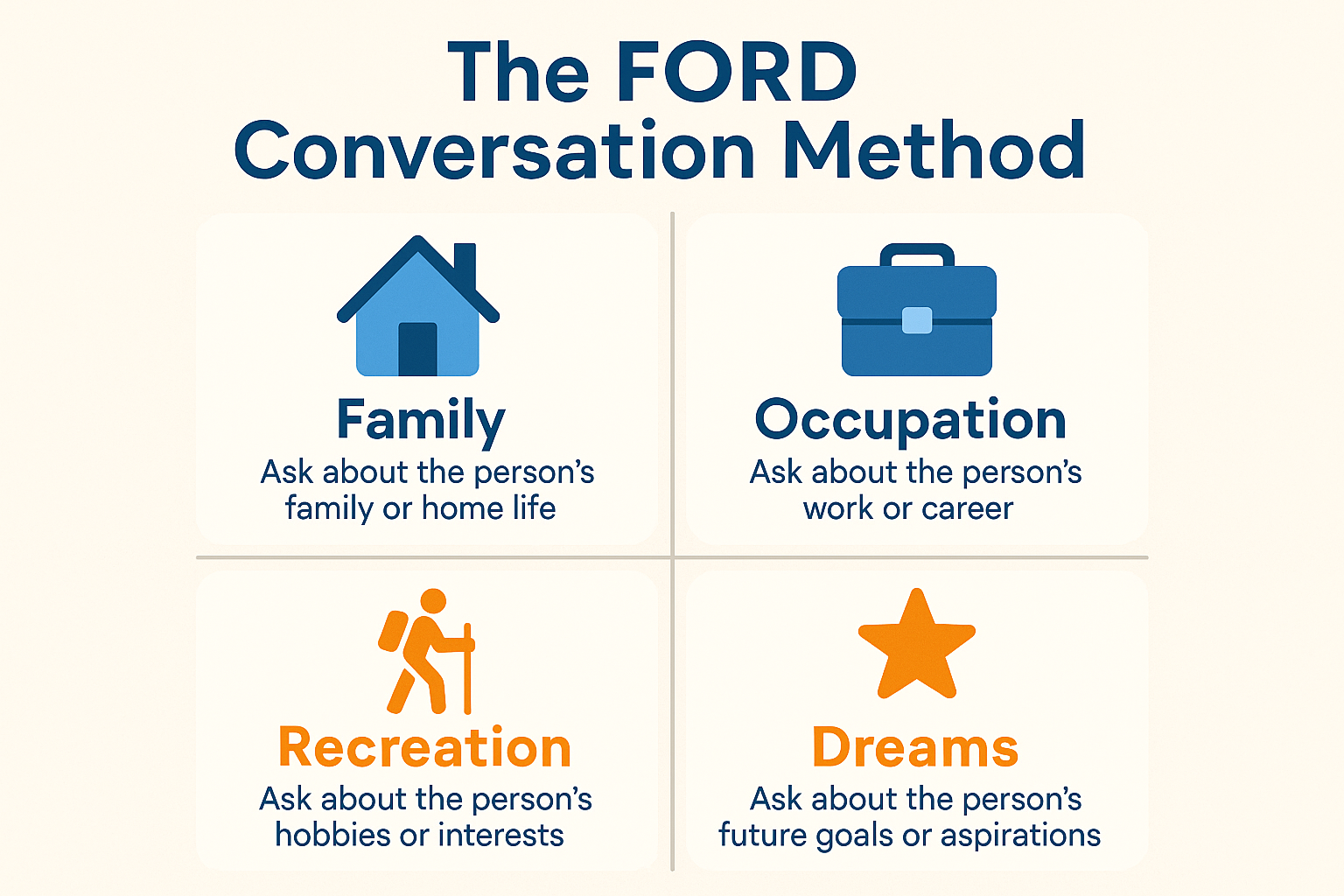
The FORD Method
Use this simple framework to keep conversations flowing naturally:
- Family: Ask about their background, siblings, or family traditions
- Occupation: Discuss work, career goals, or professional interests
- Recreation: Explore hobbies, weekend activities, or travel experiences
- Dreams: Share aspirations, bucket list items, or future plans
Active Listening Techniques
Show genuine interest by:
- Maintaining appropriate eye contact
- Asking follow-up questions that dig deeper
- Remembering details from previous conversations
- Reflecting back what you’ve heard to show understanding
Share Authentically
While it’s important to listen, don’t forget to contribute meaningfully to conversations. Share personal stories, opinions, and experiences that help others get to know the real you.
Take Initiative and Be Proactive
Waiting for others to make the first move rarely leads to new friendships. Taking initiative shows confidence and genuine interest in building connections.
Make the First Move
Examples of taking initiative:
- Suggest grabbing coffee after a class or meeting
- Invite someone to join you for an activity you were planning anyway
- Organize a group outing and invite several potential friends
- Follow up on conversations with texts or social media connections
The Two-Text Rule
When reaching out to new acquaintances, follow this simple guideline: if someone doesn’t respond to two friendly messages, give them space. This prevents you from appearing pushy while ensuring you’ve made a genuine effort.
Create Opportunities
Instead of waiting for invitations, become the person who creates social opportunities. Host game nights, organize hiking trips, or start a monthly dinner group. Being a social connector naturally attracts others who value community.
Nurture Relationships Gradually
Building meaningful friendships requires patience and consistent effort over time. Understanding the natural progression of relationships helps set realistic expectations and avoid rushing the process.
The Friendship Timeline
Casual acquaintance (0-2 months):
- Exchange basic information and pleasantries
- Meet in group settings or structured activities
- Keep interactions light and positive
Developing friendship (2-6 months):
- Begin one-on-one activities
- Share more personal stories and opinions
- Establish regular communication patterns
Close friendship (6+ months):
- Provide mutual support during challenges
- Include each other in important life events
- Develop inside jokes and shared memories
Consistency is Key
Regular, low-pressure interactions build trust and familiarity more effectively than intense, sporadic meetings. Aim for consistent touchpoints rather than overwhelming new connections with too much too soon.
Just as developing healthy habits requires consistency and patience, building friendships benefits from steady, intentional effort over time.
Overcome Social Anxiety and Fear
Social anxiety affects many adults and can significantly impact the ability to make new friends. Addressing these fears head-on with practical strategies will boost your confidence in social situations.
Start Small
Begin with low-stakes social interactions to build confidence:
- Chat with cashiers or baristas
- Compliment strangers genuinely
- Attend smaller gatherings before large events
- Practice conversations with acquaintances first
Reframe Rejection
Remember that rejection isn’t personal. People have busy lives, existing social circles, and various priorities that have nothing to do with your worthiness as a friend. Each “no” simply brings you closer to finding your people.
Use Breathing and Grounding Techniques
When anxiety strikes in social situations:
- Take slow, deep breaths to calm your nervous system
- Focus on your five senses to stay present
- Remind yourself of past social successes
- Have an exit strategy to reduce pressure
Consider incorporating better sleep habits into your routine, as adequate rest significantly impacts social confidence and emotional regulation.
Be a Good Friend to Attract Good Friends
The best way to make friends is to embody the qualities you seek in others. Focus on being the type of friend you’d want to have, and you’ll naturally attract like-minded people.
Essential Friendship Qualities
Reliability: Follow through on commitments and be dependable
Empathy: Listen without judgment and offer emotional support
Positivity: Bring good energy to interactions and avoid excessive complaining
Authenticity: Be genuine rather than trying to impress or please everyone
Generosity: Offer help, encouragement, and celebration of others’ successes
The Give-First Mentality
Instead of focusing on what you can get from potential friendships, consider what you can offer:
- Share useful resources or connections
- Offer practical help when someone mentions a challenge
- Remember important events and check in during difficult times
- Celebrate others’ achievements enthusiastically
Embrace Different Types of Friendships
Not every friendship needs to be deep and all-encompassing. Embracing various types of connections enriches your social life and reduces pressure on individual relationships.
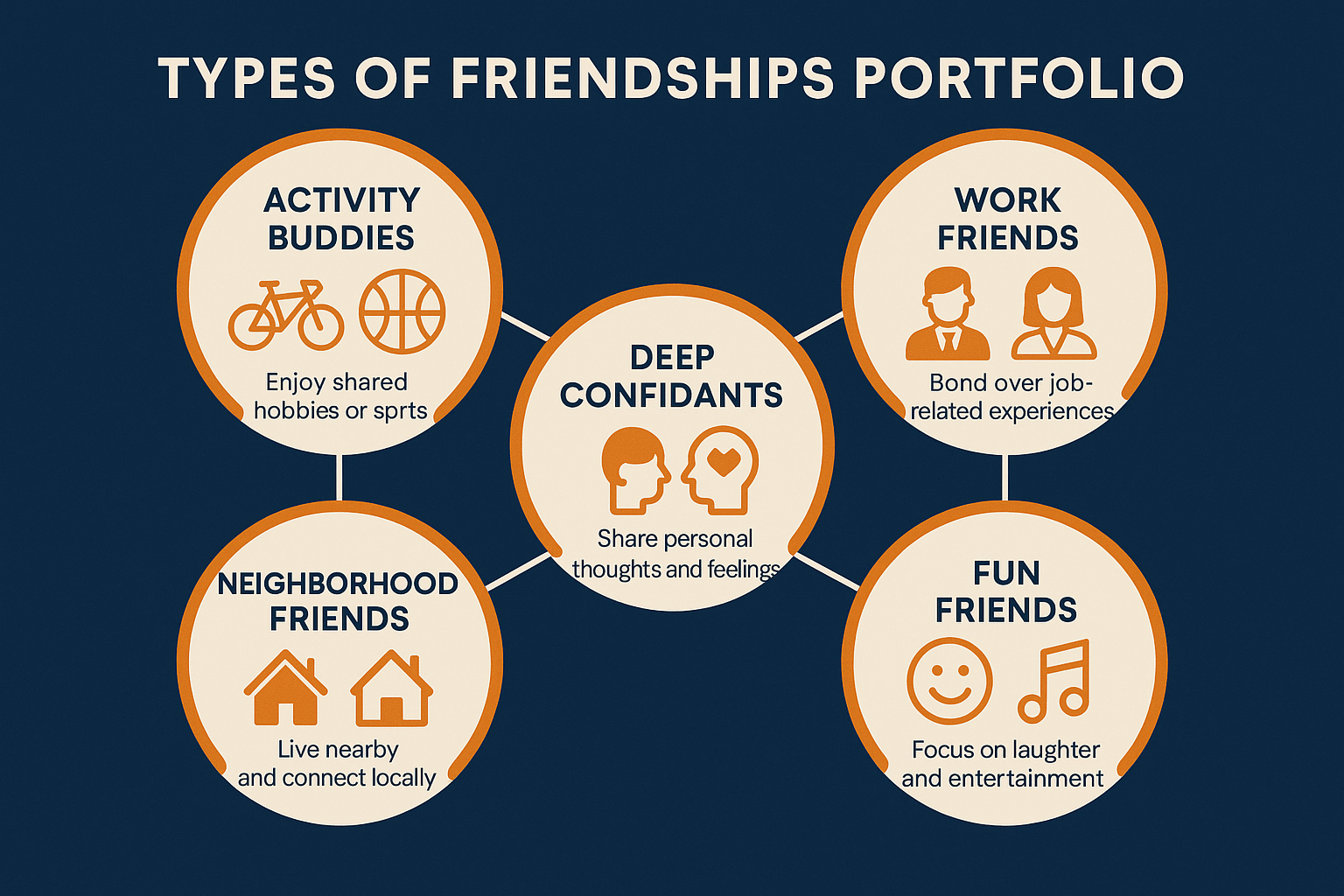
The Friendship Portfolio
Activity buddies: People you enjoy specific activities with (gym partners, hiking companions)
Work friends: Colleagues who provide professional support and workplace camaraderie
Neighborhood friends: Local connections for convenience and community feeling
Deep confidants: Close friends who know your full story and provide emotional support
Fun friends: People who bring lightness and entertainment to your life
Quality vs. Quantity
Research shows that most people can maintain approximately 5-10 close friendships and 50-100 meaningful acquaintances. Focus on building genuine connections rather than collecting contacts.
Leverage Technology Wisely

While face-to-face interaction remains crucial for deep friendships, technology can facilitate initial connections and ongoing communication when used thoughtfully.
Social Media Best Practices
- Use platforms to discover local events and communities
- Engage meaningfully with others’ content rather than just scrolling
- Share authentic moments from your life to attract compatible people
- Join online groups related to your interests before attending in-person events
Digital Communication Tips
Maintain balance between digital and in-person interactions:
- Use texts for planning and quick check-ins
- Save deeper conversations for phone calls or face-to-face meetings
- Share photos and experiences to stay connected between meetings
- Respect response times and communication preferences
Create a Lifestyle That Attracts Friendship
When you romanticize your life and create experiences you genuinely enjoy, you naturally become more magnetic to others who share your interests and values.
Develop Interesting Hobbies
Pursue activities that genuinely excite you, not just those you think will help you meet people. Authentic passion is attractive and creates natural conversation topics.
Consider exploring:
- Gardening: Join community gardens or learn about fall planting
- Home decoration: Share your space and style, perhaps incorporating seasonal decor
- Personal development: Use journaling prompts to understand yourself better
- Goal setting: Create vision boards and share your aspirations
Become a Regular
Frequent the same coffee shops, attend the same fitness classes, or volunteer regularly with the same organization. Familiarity breeds connection, and being a recognized face in your community creates natural friendship opportunities.
Host and Organize Social Events
Taking the initiative to create social opportunities positions you as a connector and gives you control over the social environment.
Low-Pressure Event Ideas
Casual gatherings work better than formal parties for building new friendships:
- Potluck dinners with a theme
- Game nights or trivia evenings
- Outdoor activities like picnics or hiking
- Skill-sharing workshops (cooking, crafts, etc.)
- Book clubs or discussion groups
The Power of Regular Events
Consider starting a monthly or weekly recurring event. Regular gatherings allow relationships to develop naturally over time and establish you as a social hub in your community.
Include Everyone
When organizing events, practice inclusive hosting:
- Send clear invitations with all necessary details
- Create activities that accommodate different personality types
- Introduce people to each other and facilitate connections
- Follow up with attendees afterward
Maintain and Deepen Existing Connections
Making new friends is only half the equation. Maintaining and deepening relationships requires ongoing attention and effort.
Regular Check-Ins
Stay connected through various touchpoints:
- Send periodic texts asking how someone is doing
- Remember and ask about important events they’ve mentioned
- Share articles, memes, or content that reminds you of them
- Suggest activities when you haven’t seen someone in a while
Celebrate Milestones
Acknowledging important moments in friends’ lives strengthens bonds:
- Remember birthdays and anniversaries
- Celebrate professional achievements
- Offer support during challenging times
- Share in their excitement about new opportunities
Create Shared Memories
Intentionally create experiences that will become fond memories:
- Plan special outings or trips together
- Start traditions or inside jokes
- Take photos and share them later
- Try new activities or restaurants together
Handle Friendship Challenges Gracefully
Not every potential friendship will work out, and even good friendships face occasional challenges. Learning to navigate these situations maturely protects your emotional well-being and social reputation.
When Friendships Don’t Click
Signs a friendship isn’t developing:
- Consistently one-sided effort in maintaining contact
- Fundamental value differences that create tension
- Lack of mutual interest or engagement
- Scheduling conflicts that never seem to resolve
How to gracefully step back:
- Gradually reduce initiation without being rude
- Remain friendly in group settings
- Focus your energy on more promising connections
- Don’t take it personally or try to force compatibility
Conflict Resolution
When conflicts arise in developing friendships:
- Address issues directly but kindly
- Listen to understand, not just to respond
- Apologize sincerely when you’re wrong
- Focus on solutions rather than blame
- Know when to agree to disagree
Conclusion
Making new friends with ease isn’t about becoming someone you’re not or using manipulative tactics. It’s about being authentically yourself while creating opportunities for genuine connections to flourish. The strategies outlined in this guide work because they focus on building real relationships based on shared interests, mutual respect, and authentic communication.
Your next steps:
- Identify 2-3 activities or communities that align with your interests and commit to attending regularly for at least two months
- Practice one conversation technique from this guide in low-stakes situations this week
- Take initiative by inviting one new acquaintance to join you for a specific activity within the next two weeks
- Focus on being a good friend to the people already in your life, which will naturally attract others
Remember that building friendships is a skill that improves with practice. Each social interaction teaches you something valuable, whether it leads to lasting friendship or not. Be patient with yourself and the process, stay open to unexpected connections, and trust that by consistently showing up as your authentic self, you’ll attract the right people into your life.
The friends you’re meant to have are out there looking for someone exactly like you. Your job is simply to make yourself findable by engaging with the world around you in meaningful ways. Start today, be consistent, and watch your social circle flourish naturally.