
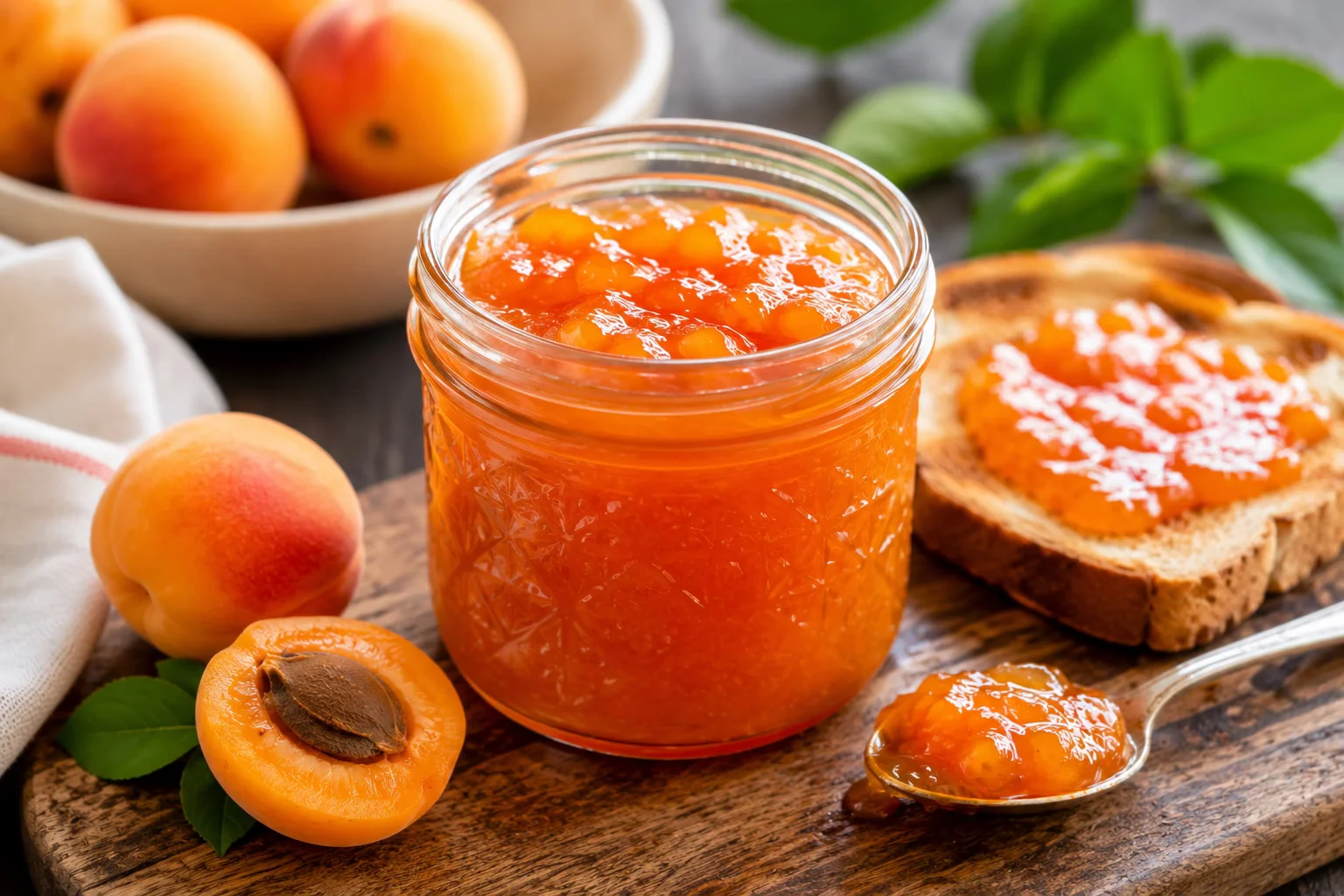
QUICK ANSWER: Apricot jam is a vibrant, tangy-sweet preserve made by cooking fresh apricots with sugar until they break down into a thick, spreadable consistency. It’s one of the most popular fruit preserves worldwide, prized for its balance of natural sweetness and bright acidity that makes it perfect for both breakfast spreads and savory cooking applications.
❤️ Why You’ll Love This Apricot Jam
Delicious for breakfast, baking, and savory glazes.akeaways
Made with just a few simple ingredients.
Sweet, tangy flavor that’s perfect for toast, pastries, and desserts.
No commercial pectin required for a naturally thick, spreadable jam.
Great for gifting, canning, and preserving fresh apricots.
There’s nothing quite like homemade Apricot Jam made from fresh, ripe apricots. With its bright color, naturally sweet flavor, and just the right amount of tartness, this simple preserve captures the taste of summer in every spoonful. Whether you’re spreading it on warm toast, swirling it into yogurt, or using it as a glaze for baked goods and roasted meats, it’s a delicious pantry staple you’ll reach for again and again.
The best part is that you only need a handful of ingredients to make a rich, flavorful jam without relying on commercial pectin. Whether you’re preserving a bumper crop of apricots or simply love homemade fruit preserves, this easy recipe is a wonderful way to enjoy apricots long after the season ends.
What Makes Apricot Jam So Special?
Apricot jam occupies a unique position in the fruit preserves market. Unlike strawberry or grape jams that lean heavily sweet, apricot jam delivers a sophisticated balance of sugar and acidity.
The natural pectin content in apricots means you get a beautiful gel without adding commercial pectin in most recipes. This creates a softer, more spreadable texture than firmer jams.
One of the best things about homemade apricot jam is how versatile it is. Spread it on toast, biscuits, or scones, use it as a filling for pastries, or brush it over fruit tarts for a beautiful glossy finish. It also makes a delicious glaze for roasted chicken, pork, or ham.
Ingredients You’ll Need

Fresh Apricots
Choose apricots that are ripe but still slightly firm. They should give just a bit when pressed but not feel mushy.
Overripe fruit contains less pectin, which means your jam won’t set properly. Underripe apricots lack the deep flavor you want.
Substitution: Frozen apricots work in a pinch. Thaw completely and drain excess liquid before measuring. You’ll need about 3.5 pounds (1.59 kg) frozen to equal 3 pounds fresh.
Granulated Sugar
Sugar does three jobs here: sweetens, preserves, and helps the jam gel. The high sugar concentration prevents bacterial growth and allows for long-term storage.
You can reduce sugar by up to 25% if you prefer a tangier jam, but you’ll sacrifice some shelf life and the jam won’t set as firmly.
Substitution: Use 3 cups (600g) sugar plus 1 cup (200g) honey for a more complex flavor. The jam will be slightly softer.
Fresh Lemon Juice
Lemon juice provides acidity that helps the pectin gel properly. It also brightens the apricot flavor and prevents the jam from tasting flat.
Substitution: Lime juice works equally well. Avoid bottled lemon juice—the fresh stuff makes a noticeable difference.
Optional Flavor Boosters
A split vanilla bean or 1/2 teaspoon almond extract adds depth. Almond and apricot are botanical cousins, so they pair naturally.
How to Make Apricot Jam
Prepare the Apricots
Wash apricots thoroughly under cool running water. Pat them completely dry.
Cut each apricot in half along the natural seam and twist to separate. Pop out the pit.
Chop the apricot halves into rough 1-inch (2.5cm) pieces. Don’t worry about uniformity—they’ll break down during cooking.
Macerate the Apricots
Combine chopped apricots and sugar in your large pot. Stir to coat every piece.
Let this mixture sit at room temperature for 30-60 minutes. The sugar will draw out the apricot juices, creating a syrupy base.
You’ll see the sugar partially dissolve and a pool of liquid form at the bottom. This step intensifies the fruit flavor.
Cook the Jam
Place the pot over medium-high heat. Stir frequently until the sugar dissolves completely, about 5 minutes.
Add the lemon juice. Bring the mixture to a rolling boil—one that doesn’t stop bubbling even when you stir.
Reduce heat to medium. Let it boil steadily, stirring every 2-3 minutes to prevent scorching on the bottom.
The apricots will break down into smaller pieces. Use a potato masher to crush any large chunks after about 15 minutes of cooking.
Watch for the jam to thicken noticeably. It should coat the back of your spoon and drip off in thick drops rather than running off quickly.
This takes 35-45 minutes total. The jam will darken from bright orange to a deeper amber color.
Test for Doneness
Keep a small plate in your freezer during cooking. When you think the jam is ready, drop a teaspoon onto the cold plate.
Wait 30 seconds, then push your finger through the jam. If it wrinkles and holds the line you’ve drawn, it’s done.
If it stays liquid and runs back together, cook for 5 more minutes and test again.
Alternatively, use a candy thermometer. The jam is ready at 220°F (104°C) at sea level. Subtract 2°F for every 1,000 feet of elevation.
Pro Tip
Don’t rely on cooking time alone. The wrinkle test on a chilled plate is one of the most reliable ways to know your jam is ready. If it wrinkles when gently pushed with your finger, it’s reached the perfect consistency.
Can or Store the Jam
Remove the pot from heat. Skim off any foam from the surface with a spoon.
Ladle hot jam into sterilized jars, leaving 1/4 inch (6mm) headspace at the top.
Wipe the jar rims with a clean, damp cloth. Any jam residue will prevent a proper seal.
Place lids on jars and screw on bands until fingertip-tight—snug but not cranked down hard.
For long-term storage, process jars in a boiling water bath for 10 minutes. For refrigerator storage only, skip this step and let jars cool completely before refrigerating.
Pro Tips for Perfect Apricot Jam
- Start with a cold pot so the fruit heats evenly and is less likely to scorch.
- Avoid doubling the recipe, as smaller batches set more consistently.
- Stir from the bottom of the pot to prevent the jam from sticking or burning.
- Expect the jam to darken slightly as it cooks and lighten a bit as it cools.
- Let sealed jars rest undisturbed for 24 hours before checking the seals.

Storage & Freezing Tips
Room Temperature Storage
Properly canned and sealed jars store at room temperature for up to 12 months. Keep them in a cool, dark place away from direct sunlight.
Once opened, refrigerate immediately. Use within 3 weeks.
Refrigerator Storage
If you skip the water bath canning step, refrigerate jam immediately after it cools. It will keep for 3 weeks.
Freezer Storage
Freeze apricot jam in freezer-safe containers for up to 6 months. Leave 1/2 inch (1.25cm) headspace to allow for expansion.
Thaw overnight in the refrigerator. Stir well before using—the texture may separate slightly but will come back together.
Make-Ahead Strategy
Prepare the chopped fruit and sugar mixture up to 24 hours ahead. Cover and refrigerate, then proceed with cooking when ready.
You can also make the full jam recipe, then freeze half for later use.
Easy Apricot Jam Variations
Vanilla Apricot Jam
Add a split vanilla bean while the jam cooks for a rich, aromatic flavor.
Spiced Apricot Jam
Add a cinnamon stick, a few whole cloves, or a pinch of cardamom for a warm, cozy flavor that’s perfect for fall.
Apricot Ginger Jam
Stir in freshly grated ginger for a bright, slightly spicy twist.
Mixed Stone Fruit Jam
Replace some of the apricots with peaches or plums for a delicious mixed fruit preserve.
Common Mistakes To Avoid
Using overripe fruit. Soft, mushy apricots lack the pectin needed for proper set. Your jam will stay runny no matter how long you cook it.
Skipping the plate test. Cooking time varies based on fruit moisture content and pot size. Visual cues and temperature are more reliable than the clock.
Filling jars too full. That 1/4 inch headspace is crucial for proper sealing. Overfilled jars won’t seal correctly.
Processing jars when the water isn’t boiling. The water must be at a full rolling boil before you start your 10-minute timer.
Moving jars before they’ve set. Jostling jars during the first 24 hours can break the seal or prevent proper gelling.
Ways to Use Apricot Jam
Homemade apricot jam is incredibly versatile. Here are some of our favorite ways to enjoy it:
Spread apricot jam on warm chocolate chip muffins for a breakfast upgrade. The tangy fruit cuts through rich, buttery baked goods perfectly.
Use it as a glaze for roasted pork or chicken during the last 10 minutes of cooking. The sugars caramelize beautifully while the fruit adds complexity.
Stir a spoonful into plain yogurt or oatmeal for natural sweetness. It’s especially good in overnight oats with sliced almonds.
Spread it between cake layers or swirl it into cheesecake batter before baking. The bright flavor prevents desserts from tasting too heavy.
Make a quick appetizer by spreading apricot jam on crostini, topping with brie, and broiling until the cheese melts. Finish with fresh thyme.
The jam also works as a component in more complex dishes—try it alongside healthy carrot zucchini muffins for a naturally sweet accompaniment.
Frequently Asked Questions
Can I make apricot jam without added pectin?
Yes. Apricots contain enough natural pectin to gel on their own when cooked with sugar and acid. The key is cooking until the mixture reaches 220°F (104°C) or passes the wrinkle test on a cold plate.
Why is my apricot jam runny?
Three common causes: underripe fruit with low pectin, insufficient cooking time, or not enough acid. Recook the jam with an additional tablespoon of lemon juice and test again for doneness.
How do I know if my canned jam sealed properly?
After 24 hours, press the center of each lid. It should not flex up and down. You should not be able to lift the lid off with your fingers when the band is removed.
What’s the white foam on top of my jam?
That’s air bubbles and fruit proteins that rise during cooking. It’s harmless but can make the jam look cloudy. Skim it off before jarring for the clearest appearance.
How long does homemade apricot jam last?
Properly canned and sealed jars last 12 months at room temperature. Refrigerated jam (not water bath processed) keeps for 3 weeks. Frozen jam stores for 6 months.
Conclusion
Homemade Apricot Jam is a simple and rewarding way to preserve the sweet, sunny flavor of fresh apricots. With just a handful of ingredients and a little patience, you’ll have a delicious homemade preserve that’s perfect for spreading on toast, filling pastries, glazing roasted meats, or adding to your favorite desserts.
If you enjoyed this recipe, be sure to try our Best Rhubarb Muffins, Chocolate Chip Muffins, Healthy Carrot Zucchini Muffins, and Vegan Applesauce Cake for more homemade recipes that pair beautifully with fruit preserves.


