
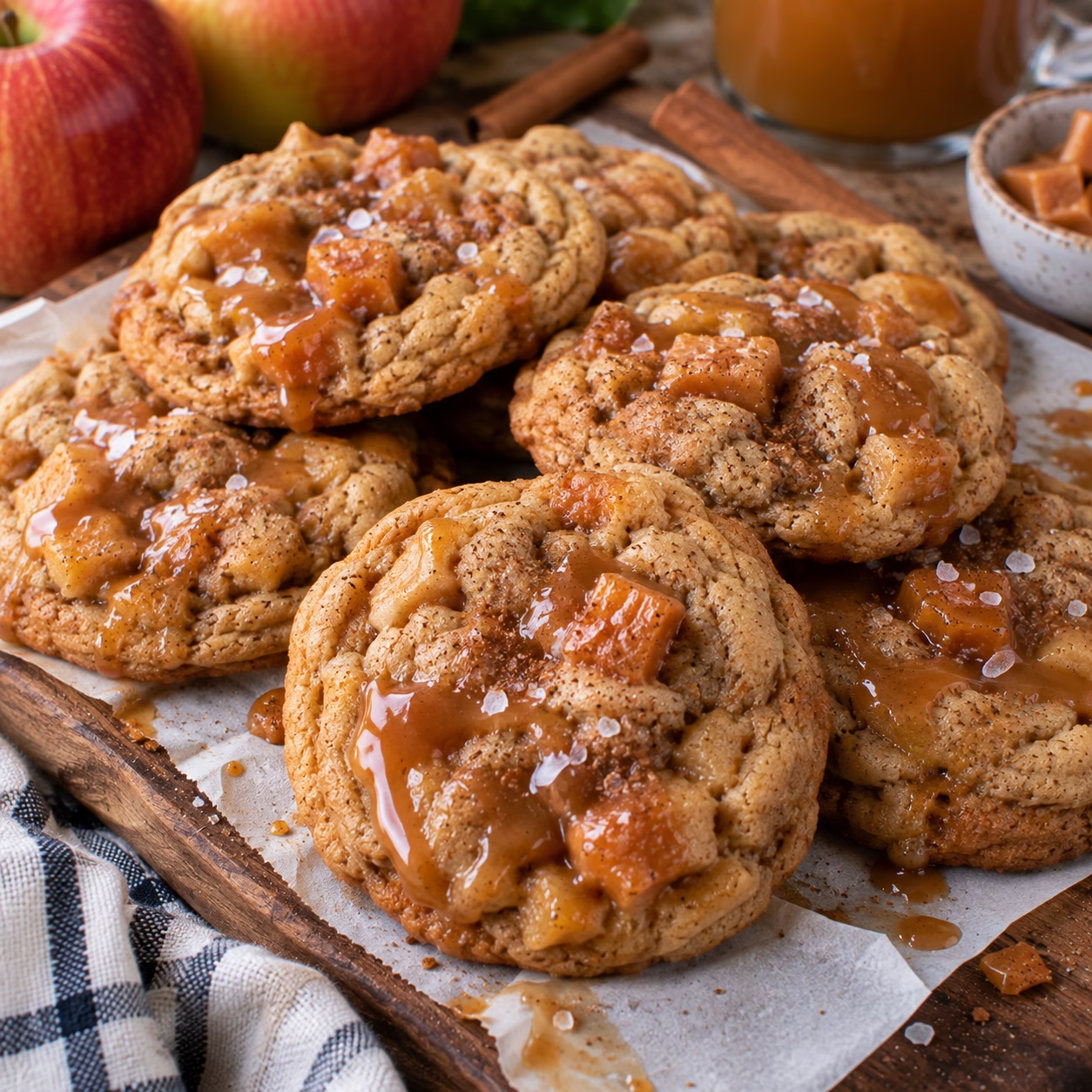
Caramel apple cider cookies are soft, chewy fall cookies made with concentrated apple cider, brown sugar, warm spices, and plenty of caramel. Reducing the cider before adding it to the dough concentrates its apple flavor without adding too much liquid, giving these cookies a deeper apple-cider taste than a standard spiced cookie.
The caramel adds buttery sweetness while cinnamon and nutmeg give the cookies that cozy fall flavor. They’re especially good for fall gatherings, holiday cookie trays, bake sales, or simply enjoying with a warm mug of cider.
For the best texture, chill the dough before baking and remove the cookies while the centers still look slightly soft. They’ll continue setting as they cool.
Quick Answer
To make caramel apple cider cookies, reduce apple cider until concentrated, cool it, then mix it with melted butter, brown sugar, granulated sugar, egg, and vanilla. Stir in flour, baking soda, cinnamon, nutmeg, salt, and caramel pieces, then chill the dough before scooping and baking at 350°F.
Bake until the edges are set and lightly golden while the centers still look slightly soft. Let the cookies cool on the baking sheet before transferring them to a rack.
❤️ Why You’ll Love This Recipe

- Concentrated apple cider gives the cookies a noticeably deeper apple flavor.
- Soft caramel pieces add gooey pockets of buttery sweetness.
- Brown sugar keeps the cookies soft and chewy rather than crisp.
- The dough comes together without a stand mixer.
- They’re perfect for fall parties, cookie exchanges, and holiday dessert trays.
Ingredients You’ll Need
For the Cider Reduction
- 2 cups (475 ml) apple cider
For the Cookie Dough
- ½ cup (113 g) unsalted butter, melted and slightly cooled
- ½ cup (100 g) packed dark brown sugar
- ¼ cup (50 g) granulated sugar
- 1 large egg
- 1 teaspoon vanilla extract
- ¼ cup (60 ml) cooled reduced apple cider
- 1½ cups (188 g) all-purpose flour
- 1 teaspoon baking soda
- 1 teaspoon ground cinnamon
- ½ teaspoon ground nutmeg
- ¼ teaspoon kosher salt
- ¾ cup (about 130 g) soft caramel baking bits or finely chopped soft caramels
For Finishing
- Flaky sea salt, optional
- A few extra caramel pieces, optional
I would leave fresh apple out of the main recipe. While some apple cider cookie recipes include diced apples, this particular dough already contains concentrated cider and caramel. Adding fresh apple introduces extra moisture and can make the finished texture less predictable.
Equipment You’ll Need
- Small saucepan
- Large mixing bowl
- Medium mixing bowl
- Whisk
- Rubber spatula
- Cookie scoop
- Baking sheets
- Parchment paper or silicone baking mats
- Wire cooling rack
How to Make Caramel Apple Cider Cookies
Step 1: Reduce the Apple Cider
Pour the apple cider into a small saucepan.
Bring it to a boil over medium-high heat, then reduce the heat and let it simmer steadily until it reduces to about ¼ cup.
This usually takes around 20–25 minutes, although the exact time depends on the size of your saucepan and how strongly the cider is simmering.
The finished reduction should look noticeably darker and slightly syrupy rather than watery.
Remove it from the heat and let it cool completely.
Don’t add hot cider reduction to the cookie dough. Warm liquid can soften the butter and make the dough more difficult to control.
Step 2: Mix the Wet Ingredients
In a large bowl, whisk together the melted butter, brown sugar, and granulated sugar until smooth.
Add the egg and vanilla and whisk until combined.
Pour in the cooled cider reduction and mix until evenly incorporated.
Step 3: Combine the Dry Ingredients
In a separate bowl, whisk together the flour, baking soda, cinnamon, nutmeg, and salt.
Add the dry ingredients to the wet ingredients.
Use a spatula to mix just until no obvious streaks of flour remain.
Don’t overmix the dough. Once the flour disappears, stop stirring.
Step 4: Add the Caramel
Fold the caramel pieces into the dough.
Try to keep most of the caramel pieces surrounded by dough rather than sitting directly on the outside of the cookie. Exposed caramel is more likely to melt onto the baking sheet.
The dough will be soft at this point.

Step 5: Chill the Dough
Cover the bowl and refrigerate the dough for at least 30 minutes.
For an even firmer dough and easier portioning, you can chill it longer.
Comparable caramel apple cider cookie recipes also use longer chilling periods, particularly when working with reduced cider.
Step 6: Portion the Cookies
Preheat the oven to 350°F (175°C).
Line baking sheets with parchment paper or silicone baking mats.
Scoop the chilled dough into roughly 1½-inch balls.
Place them several inches apart to give them room to spread.
If any large caramel pieces are sitting completely exposed on the outside of the dough balls, gently push them farther into the center.
Step 7: Bake
Bake for about 10–12 minutes.
The edges should look set and lightly golden while the centers remain slightly soft and puffy.
Don’t wait for the centers to become completely firm in the oven. Comparable apple cider cookie recipes use this same visual cue and bake around 10–13 minutes at 350°F.
Step 8: Cool and Finish
Let the cookies rest on the baking sheet for about 5 minutes.
They’ll continue cooking and firming up from the residual heat of the pan.
Transfer them to a wire rack to cool completely.
If desired, press a few tiny caramel pieces onto the warm tops and finish with a light sprinkle of flaky sea salt.

Tips for the Best Caramel Apple Cider Cookies
- Reduce the cider properly. Watery cider reduction can make the dough too loose and dilute the apple flavor.
- Cool the reduction completely. This keeps the melted butter from becoming overly warm.
- Measure flour accurately. Too much flour is one of the quickest ways to turn a soft cookie dry.
- Chill the dough. Cold dough spreads more slowly and helps the cookies stay thicker.
- Use small caramel pieces. Large chunks are more likely to leak out onto the baking sheet.
- Keep caramel away from the outside. Tuck exposed pieces into the dough before baking.
- Watch the cookies instead of relying only on the timer. The edges should be set while the centers remain soft.
- Don’t overcrowd the pan. Give the cookies room to spread.
- Let them cool before moving them. Freshly baked cookies are fragile and firm as they cool.
Storage & Make-Ahead
Room-Temperature Storage
Once completely cooled, store the cookies in an airtight container at room temperature for about 3–4 days for best texture.
USDA guidance notes that ordinary homemade cookies can generally be stored at room temperature for considerably longer, but quality declines over time.
Place parchment between layers if the caramel makes the cookies stick together.
Make-Ahead Dough
The dough can be prepared ahead and refrigerated, tightly covered, before baking.
For longer storage, portion the dough into balls and freeze them on a lined baking sheet until solid. Transfer the frozen dough balls to an airtight freezer container or bag.
Bake from frozen, adding a little extra baking time as needed.
Freezing Baked Cookies
Cool baked cookies completely before freezing.
Place parchment between layers in an airtight freezer-safe container.
For best quality, use within about 2–3 months, although USDA notes that properly stored cookies can retain quality in the freezer for longer.
Variations
Apple Cider Donut Style
Roll the chilled dough balls in cinnamon sugar before baking for a flavor reminiscent of apple cider donuts.
White Chocolate Caramel
Fold in about ½ cup white chocolate chips along with the caramel pieces.
Pecan Caramel Apple
Add ½ cup finely chopped toasted pecans for extra crunch.
Oatmeal Caramel Apple
Replace part of the flour with rolled oats for a heartier cookie.
Maple Caramel
Use maple-flavored caramel pieces for a deeper fall flavor.
Gluten-Free
Use a 1:1 gluten-free baking flour blend designed for cookies. Check every ingredient, including the caramel and cider, for gluten-containing additives if you’re baking for someone with celiac disease.
Dairy-Free
Use a plant-based butter formulated for baking and dairy-free caramel pieces. The egg remains in the standard recipe.
For a vegan version, you’ll also need an appropriate egg replacement, but the texture should be tested with the specific substitute because different egg replacements behave differently in cookies.

Common Mistakes to Avoid
Not Reducing the Cider Enough
If the cider is still thin and watery, you’ve stopped too early. The goal is concentrated cider rather than simply warm cider.
Adding Warm Cider to the Dough
Let the reduction cool completely before mixing it in.
Using Large Caramel Chunks
Large pieces can melt through the bottom or sides of the cookies. Smaller pieces distribute more evenly.
Leaving Caramel on the Outside
Caramel sitting directly against the baking sheet can melt and spread. Tuck exposed pieces into the dough.
Skipping the Chill
The dough is soft because of the melted butter and cider. Chilling gives it more structure before it reaches the oven.
Overbaking
These cookies should not look completely finished in the center when they leave the oven. They’ll firm up as they cool.
Adding Too Much Fresh Apple
Fresh apple contains significant moisture. If you want visible apple pieces, use a small amount of finely diced, well-dried apple rather than adding a large quantity.
FAQ
What do caramel apple cider cookies taste like?
They taste like a soft, chewy spice cookie with concentrated apple flavor, warm cinnamon and nutmeg, and buttery caramel throughout.
Can I use apple juice instead of apple cider?
Yes. Apple juice can work, but it tends to be sweeter and less complex than cider. Reduce it in the same way and consider adding a small squeeze of lemon juice to bring back some acidity.
Do I have to reduce the apple cider?
For this particular recipe, yes. The reduction concentrates the apple flavor while removing much of the excess water.
Other apple cider cookie recipes use different formulas and sometimes incorporate a larger quantity of cider directly into the dough, so those recipes should not automatically be treated as interchangeable with this one.
Why did my cookies spread too much?
The most likely causes are insufficient chilling, an overly warm dough, too little flour, or cider that wasn’t reduced enough.
Chill the dough longer and make sure your cider reduction has reached the intended consistency.
Why did my caramel leak out?
Large caramel pieces placed too close to the outside of the dough can melt through during baking.
Use smaller pieces and tuck them into the center of each dough ball.
Can I make the dough ahead of time?
Yes. Keep the covered dough refrigerated until you’re ready to portion and bake it.
For longer storage, freeze portioned dough balls.
Can I add fresh apple?
You can, but I don’t recommend it for the base recipe because fresh apple adds water and changes the dough’s texture.
If you experiment with it, keep the amount modest and dice it very finely.
Can I use caramel sauce instead of caramel pieces?
Not directly in the dough. Caramel sauce adds considerably more liquid and can change the consistency of the cookie dough.
For a caramel finish, drizzle a small amount over completely cooled cookies instead.
Why are my cookies dry?
Usually they’re either overbaked or contain too much flour.
Remove them when the edges are set but the centers are still soft. Also measure flour carefully rather than packing it into the measuring cup.
Can I freeze caramel apple cider cookies?
Yes. Both baked cookies and portioned raw dough can be frozen. For best quality, use frozen baked cookies within a few months.
More Cookie Recipes You’ll Love
- Healthy Zucchini Oatmeal Cookies
- Carrot Cake Cookies
- Peach Cobbler Cookies
- Vegan Peanut Butter Cookies
- Vegan Snickerdoodle Cookies
- Soft Chewy Lemon Sugar Cookies
- Blueberry Crinkle Cookies
Conclusion
Caramel apple cider cookies are a cozy fall cookie with concentrated apple flavor, buttery caramel, and warm spices in every bite. The recipe is straightforward, but the details matter: reduce the cider properly, cool it completely, chill the dough, keep the caramel pieces tucked inside, and pull the cookies from the oven while the centers are still soft.
That combination gives you cookies that are chewy in the middle, lightly crisp around the edges, and packed with the flavor of caramel apples.
Caramel Apple Cider Cookies
Ingredients
Cider Reduction
- 2 cups 475 ml apple cider
Cookie Dough
- ½ cup 113 g unsalted butter, melted and slightly cooled
- ½ cup 100 g packed dark brown sugar
- ¼ cup 50 g granulated sugar
- 1 large egg
- 1 teaspoon vanilla extract
- ¼ cup 60 ml cooled reduced apple cider
- 1½ cups 188 g all-purpose flour
- 1 teaspoon baking soda
- 1 teaspoon ground cinnamon
- ½ teaspoon ground nutmeg
- ¼ teaspoon kosher salt
- ¾ cup about 130 g soft caramel baking bits or finely chopped soft caramels
Finishing
- Flaky sea salt optional
- Extra caramel pieces optional
Instructions
- Pour apple cider into a small saucepan and simmer until reduced to about ¼ cup. Cool completely.
- Whisk melted butter, brown sugar, and granulated sugar until smooth.
- Add egg, vanilla, and cooled cider reduction and whisk until combined.
- In a separate bowl, whisk flour, baking soda, cinnamon, nutmeg, and salt.
- Add the dry ingredients to the wet ingredients and mix just until combined.
- Fold in the caramel pieces.
- Cover and refrigerate the dough for at least 30 minutes.
- Preheat oven to 350°F (175°C) and line baking sheets with parchment or silicone mats.
- Scoop dough into approximately 1½-inch balls and space them well apart.
- Bake for 10–12 minutes, until the edges are set and lightly golden while the centers remain soft.
- Cool on the baking sheet for about 5 minutes, then transfer to a wire rack.
- Finish with flaky sea salt if desired.
Notes


