
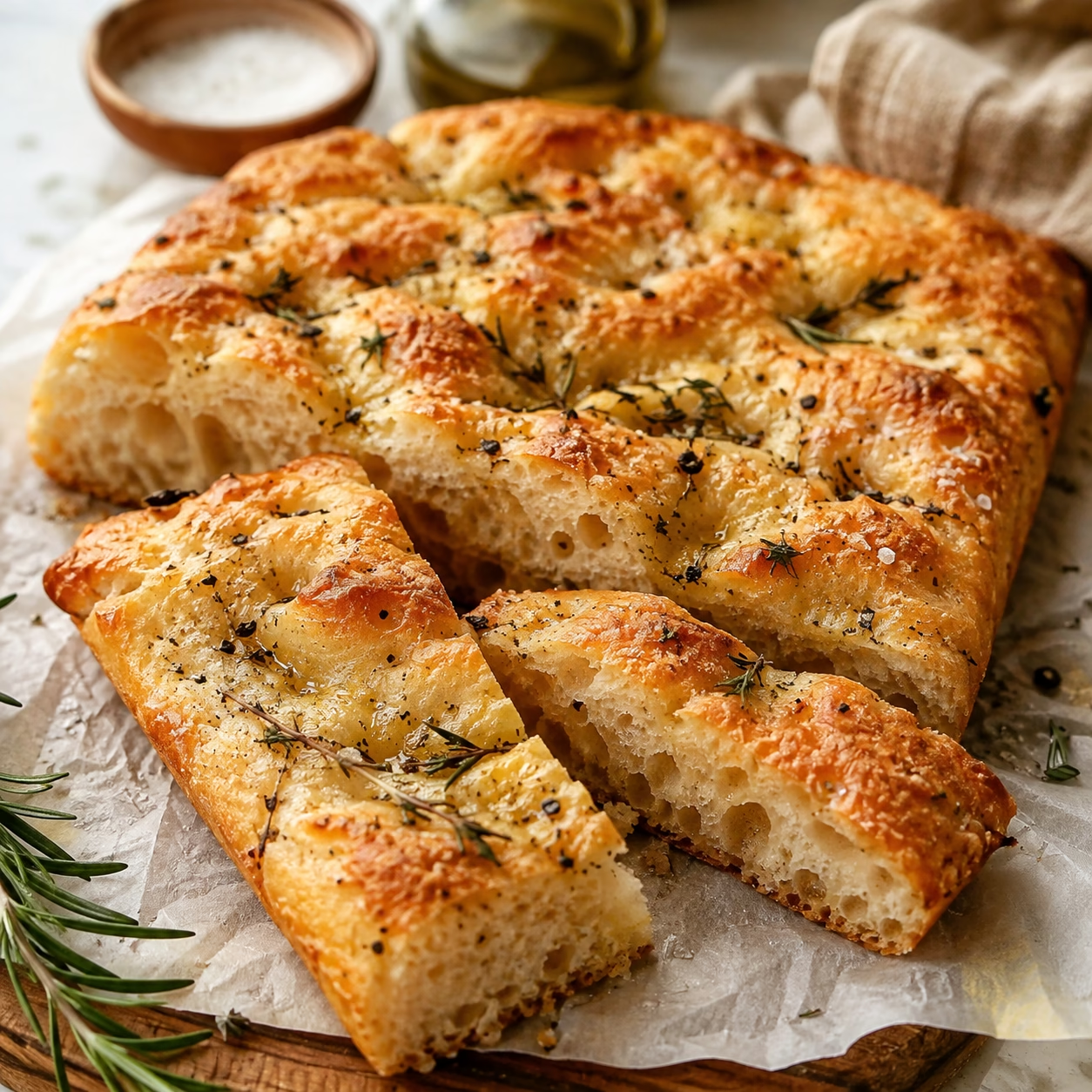
This Sourdough Focaccia has a crisp, golden olive-oil crust, a soft and airy center, and plenty of little pockets that make focaccia so satisfying to tear into. It takes some patience because the dough needs time to ferment, but the actual hands-on work is simple.
The dough is intentionally wet, so don’t be tempted to add lots of extra flour. A few gentle stretch-and-folds help build strength, while a generous coating of olive oil gives the finished bread its deliciously crisp edges.
Quick Answer: Sourdough focaccia is made with bread flour, water, active sourdough starter, salt, and olive oil. The dough is mixed, strengthened with stretch-and-folds, fermented until bubbly and puffy, then transferred to a generously oiled pan. After a final rise, the dough is covered with olive oil, dimpled with your fingertips, and baked until golden.
For this recipe, bake the focaccia at 425°F (220°C) for about 25–30 minutes.
Why You’ll Love This Sourdough Focaccia
- It has a crisp, golden crust and soft, airy center.
- You don’t need a stand mixer.
- There is no complicated shaping.
- The stretch-and-fold method is simple to learn.
- You can make it the same day or use an overnight fermentation.
- It works beautifully with different herbs and toppings.
- Every loaf develops its own slightly different bubbles and dimples.
- It pairs wonderfully with soups, stews, salads, and pasta.
Ingredients You’ll Need

For the Dough
- 500 g (about 4 cups) bread flour – Provides the gluten strength needed for this high-hydration dough.
- 400 g (1⅔ cups) water – Creates the wet dough that helps produce an airy crumb.
- 100 g active sourdough starter – Provides the natural fermentation and leavening.
- 10 g fine sea salt – Seasons the bread and helps strengthen the dough.
- 30 g (2 tablespoons) extra-virgin olive oil – Adds flavor and richness to the dough.
For the Pan and Topping
- Extra-virgin olive oil, as needed – Used generously to coat the pan and dough.
- Flaky sea salt, for topping – Adds a delicious salty finish.
- Fresh rosemary, optional – Adds classic focaccia flavor.
Important Starter Note
Use an active, bubbly sourdough starter rather than sluggish refrigerated discard. Your starter should be showing strong activity after feeding before you begin the dough.
Equipment You’ll Need
- 9×13-inch (23×33 cm) baking pan
- Large mixing bowl
- Kitchen scale
- Measuring spoons
- Dough scraper, optional
- Rubber spatula
- Plastic wrap or bowl cover
- Wire cooling rack
- Pastry brush, optional
How to Make Sourdough Focaccia
1. Prepare Your Sourdough Starter
Make sure your sourdough starter is active and bubbly before beginning.
Ideally, use it when it has risen well after feeding and is showing plenty of bubbles.
2. Mix the Flour and Water
Add the bread flour and water to a large mixing bowl.
Mix until all the flour is hydrated and there are no obvious dry patches.
The dough will look shaggy and loose.
Cover and let it rest for 30 minutes.
3. Add the Starter and Salt
Add the active sourdough starter and salt.
Use your hands to pinch and fold the dough until everything is evenly distributed.
The dough will be sticky at this stage, which is normal.

4. Begin the Bulk Fermentation
Cover the bowl and let the dough ferment at room temperature.
During the first 2 hours, perform four sets of stretch-and-folds about 30 minutes apart.
5. Stretch and Fold the Dough
With wet hands, grab one side of the dough and gently stretch it upward.
Fold it over toward the opposite side.
Turn the bowl and repeat on the other sides.
After several rounds, the dough should feel smoother, stronger, and more elastic.
6. Continue Fermenting
After the final fold, cover the dough and let it continue fermenting until it becomes noticeably larger, puffy, bubbly, and slightly jiggly.
This can take approximately 4–6 hours, depending on the strength of your starter and the temperature of your kitchen.
Don’t rely only on the clock. The dough itself should tell you when it is ready.

7. Refrigerate the Dough, If Desired
For an overnight version, cover the dough and refrigerate it for approximately 8–18 hours.
For a same-day focaccia, continue directly to the next step once bulk fermentation is complete.
8. Prepare the Baking Pan
Generously coat a 9×13-inch baking pan with olive oil.
Make sure the bottom and sides are well coated.
9. Transfer the Dough
Gently loosen the dough from the bowl using wet or lightly oiled hands.
Transfer it to the prepared pan.
Turn the dough once so that it gets coated with some of the olive oil.
Gently stretch it toward the edges.
If it keeps springing back, let it rest for 10–15 minutes, then stretch it again.

10. Let the Dough Rise
Cover the pan loosely and allow the dough to proof at room temperature.
This can take approximately 1–4 hours, depending on the temperature and whether the dough was refrigerated.
The dough should become noticeably puffy and show bubbles across the surface.
11. Preheat the Oven
Preheat the oven to 425°F (220°C).
Place the rack in the center of the oven.
12. Dimple the Dough
Drizzle the surface generously with olive oil.
Lightly oil your fingertips.
Press your fingertips firmly into the dough to create deep dimples across the surface.
Don’t press completely through the dough.
13. Add the Toppings
Sprinkle the surface with flaky sea salt.
If using rosemary, scatter it evenly over the dough.
You can also add other toppings at this stage.
14. Bake the Focaccia
Bake for 25–30 minutes, or until the focaccia is deeply golden on top and the edges and bottom are nicely browned.
If your oven tends to run hot, begin checking toward the earlier end of the baking range.

15. Cool Before Slicing
Remove the focaccia from the oven and let it rest in the pan for about 5 minutes.
Transfer it to a wire rack and allow it to cool for at least 20 minutes before slicing.
Tips for the Best Sourdough Focaccia
Use an Active Starter
A strong starter is essential because it provides the leavening for the bread.
If your starter is sluggish, fermentation may take much longer.
Don’t Add Extra Flour
This dough is supposed to be sticky.
Adding lots of flour will change the hydration and can make the finished focaccia dense.
Use wet or lightly oiled hands instead.
Watch the Dough
Fermentation times vary.
A warm kitchen can speed things up, while a cool kitchen can slow everything down.
Look for a dough that is visibly expanded, bubbly, airy, and jiggly.
Don’t Skip the Folds
The stretch-and-folds help develop the gluten structure that holds the bubbles created during fermentation.
Handle the Dough Gently
Once the dough is bubbly, avoid aggressively kneading it or pressing all the air out.
Those bubbles are what help create the open crumb.
Use Plenty of Olive Oil
Generous olive oil helps prevent sticking and contributes to the crisp, flavorful crust and edges.
Don’t Overload the Toppings
Keep toppings reasonably light so they don’t weigh down the dough.
Let It Cool
Giving the focaccia time to cool allows the crumb to finish setting and makes it easier to slice.
Storage & Make-Ahead
Room Temperature
Once completely cool, store the focaccia in an airtight container or tightly wrapped at room temperature for up to 2–3 days.
Freezer
Cut the focaccia into individual portions and wrap them tightly.
Place them in a freezer-safe bag or container and freeze for up to 3 months.
Reheating
Reheat frozen or room-temperature focaccia in a 350°F (175°C) oven until warmed through and crisp around the edges.
Make Ahead
The dough can be refrigerated overnight after bulk fermentation.
This makes it easier to fit the recipe into your schedule and gives the dough additional time to develop flavor.
Variations
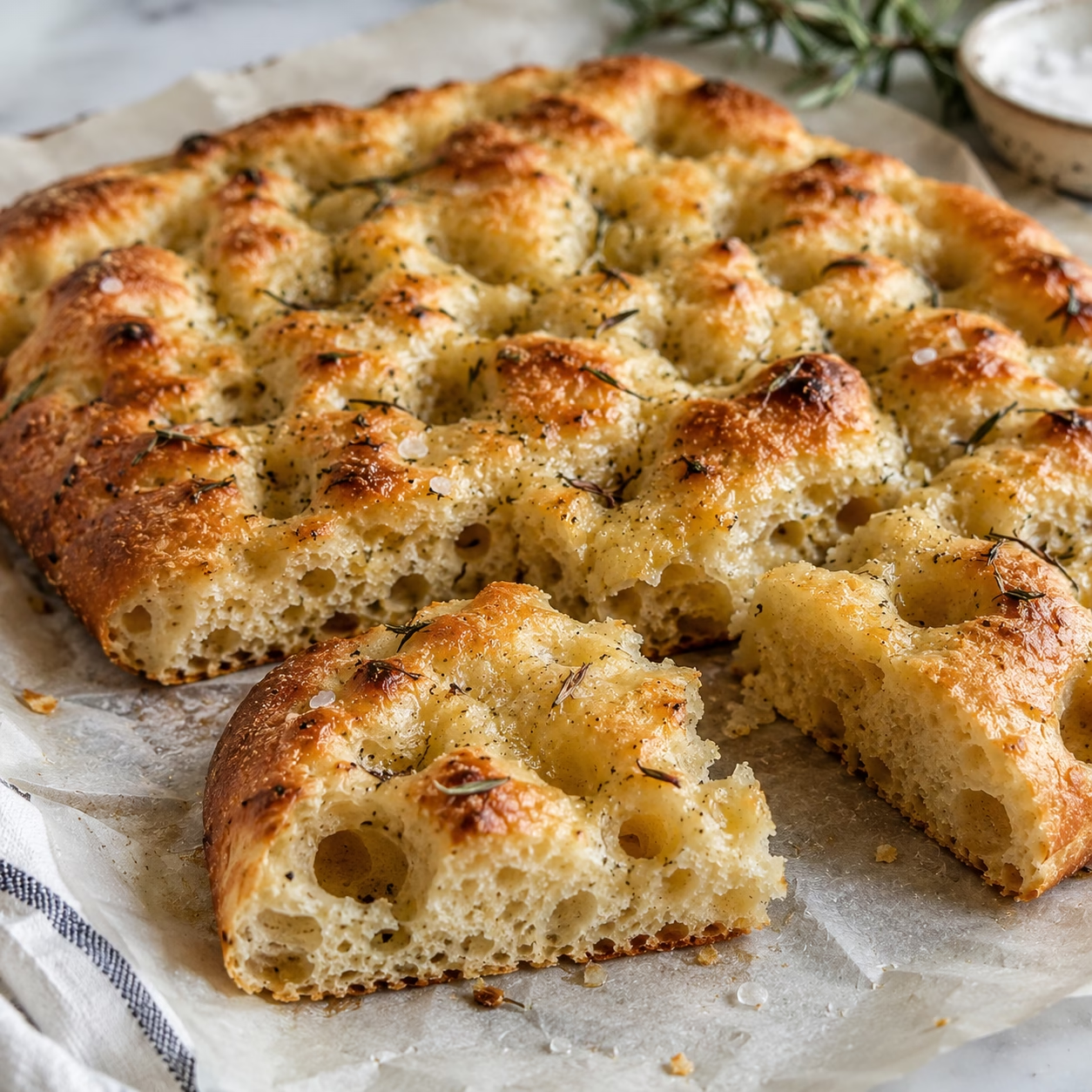
Rosemary Garlic Focaccia
Add fresh rosemary and thinly sliced garlic before baking.
Tomato Basil Focaccia
Press halved cherry tomatoes gently into the dough and finish with fresh basil after baking.
Caramelized Onion Focaccia
Add caramelized onions with rosemary and flaky sea salt.
For another recipe featuring caramelized onions, try our Vegan Caramelized Onion Tart.
Olive Focaccia
Add pitted green or Kalamata olives and a sprinkle of oregano.
Grape Focaccia
For a sweet-savory version, add seedless grapes, rosemary, olive oil, and flaky salt.
Simple Sea Salt Focaccia
Skip all the extra toppings and use only olive oil and flaky sea salt.
This is one of the simplest and most delicious versions.
Common Mistakes to Avoid
The Dough Is Too Sticky
Cause: The dough has a high hydration.
Fix: Don’t automatically add flour. Wet or oil your hands when handling it.
The Dough Isn’t Rising
Cause: Your starter may be weak or the kitchen may be too cool.
Fix: Give the dough more time and make sure your starter is active before using it.
The Focaccia Is Dense
Cause: Under-fermentation, weak starter activity, or adding too much extra flour.
Fix: Allow the dough to ferment until it is visibly puffy and bubbly.
The Dough Won’t Reach the Edges
Cause: The gluten hasn’t relaxed enough.
Fix: Let the dough rest for 10–15 minutes and gently stretch it again.
The Focaccia Sticks to the Pan
Cause: Not enough oil or an insufficiently coated pan.
Fix: Generously oil the bottom and sides of the pan before adding the dough.
The Top Browns Too Quickly
Cause: Your oven may run hotter than expected.
Fix: Check the focaccia before the end of the baking time and tent loosely with foil if necessary.
The Center Is Gummy
Cause: The bread may be underbaked.
Fix: Continue baking until the center is fully set and the top and edges are deeply golden.
The Focaccia Has Few Bubbles
Cause: Weak starter, insufficient fermentation, or rough handling.
Fix: Use an active starter, allow enough fermentation time, and handle the dough gently after it becomes bubbly.
FAQ
What Is Sourdough Focaccia?
Sourdough focaccia is an Italian-style flatbread leavened with an active sourdough starter. It has a crisp olive-oil crust, soft interior, and characteristic fingertip dimples.
What Temperature Should I Bake Sourdough Focaccia?
Bake this version at 425°F (220°C) for approximately 25–30 minutes.
Can I Use All-Purpose Flour?
Yes. Bread flour is preferred because its stronger gluten structure works particularly well with the wet dough, but all-purpose flour can be used.
Do I Need a Stand Mixer?
No. The dough can be mixed and strengthened by hand using stretch-and-folds.
Can I Use Sourdough Discard?
Not reliably for this recipe unless the discard is still highly active. A refrigerated discard generally doesn’t provide the same dependable leavening as an active starter.
How Do I Know When Bulk Fermentation Is Done?
Look for a dough that has increased noticeably in volume, developed bubbles, and feels airy and slightly jiggly.
Can I Make This Focaccia the Same Day?
Yes. You can skip the overnight refrigeration and continue once bulk fermentation is complete.
How Long Does Sourdough Focaccia Take to Rise?
The timing varies with starter strength and temperature. Bulk fermentation may take around 4–6 hours, followed by approximately 1–4 hours of final proofing.
Use the appearance and feel of the dough as your main guide.
Why Is My Sourdough Focaccia Dense?
A weak starter, under-fermentation, too much added flour, or rough handling can all result in dense focaccia.
More Bread & Side Recipes You’ll Love
- Beef Stew With Carrots And Potatoes
- Fresh Winter Citrus And Fennel Salad
- Vegan Caramelized Onion Tart
- Vegan Stuffing
- Yummy Vegan Coconut Curry Chickpea Soup
Conclusion
Sourdough Focaccia takes patience, but the process is much simpler than it may seem. You don’t need to shape a perfect loaf or master complicated scoring techniques. Once the dough is mixed and strengthened, most of the work is simply waiting for fermentation to do its job.
Use an active starter, resist adding unnecessary flour, give the dough its stretch-and-folds, and watch for those important signs of fermentation—bubbles, volume, and a soft, jiggly texture.
Then comes the fun part: plenty of olive oil, deep dimples, flaky salt, and whatever


