
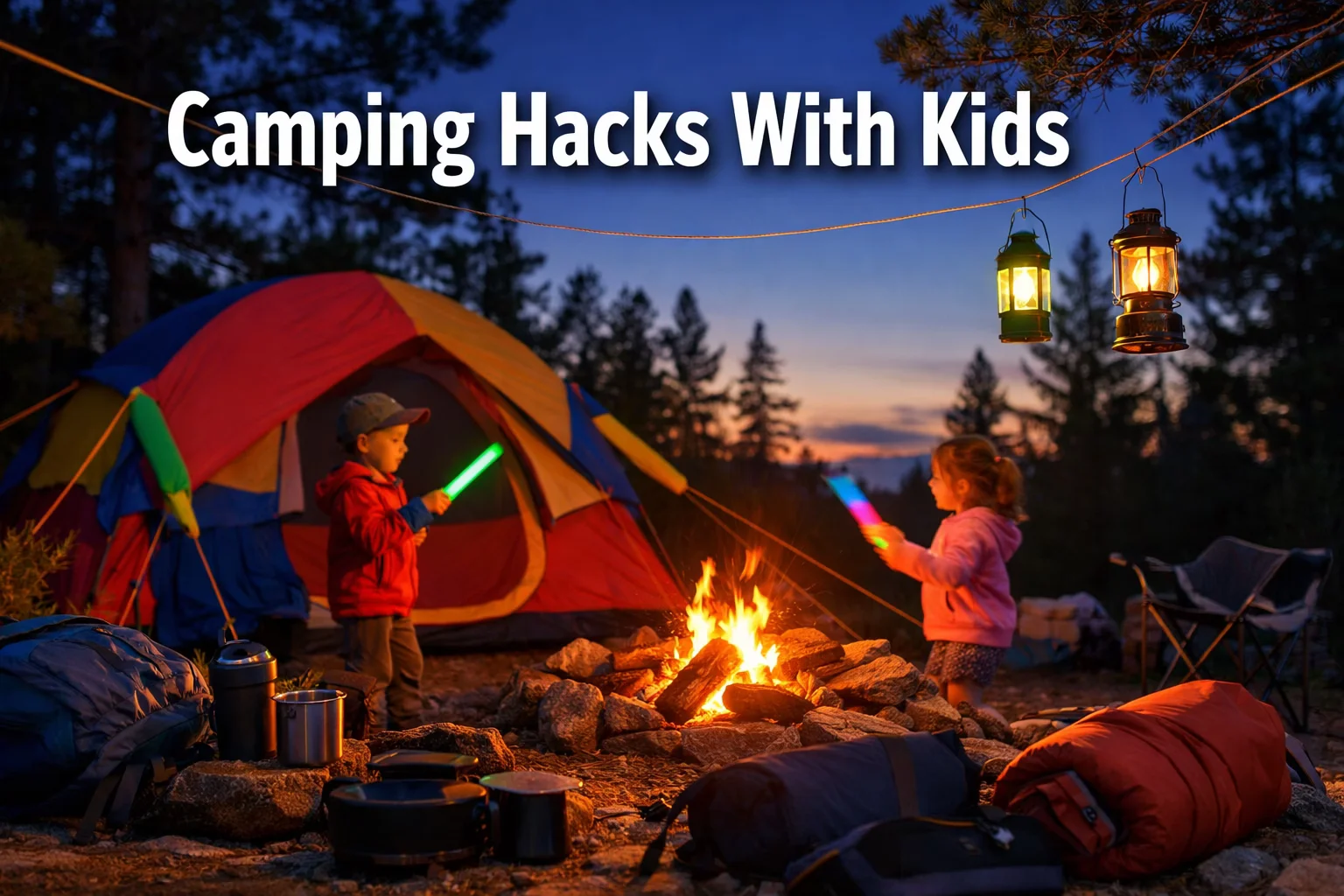
Camping hacks with kids focus on safety, organization, and entertainment solutions that make family outdoor adventures manageable and enjoyable. Key strategies include using glow sticks for nighttime child visibility, pool noodles for tent line cushioning, multi-room tents for space management, and pre-planned activity kits to keep children engaged throughout the trip.
1. What Are the Most Important Safety Hacks for Camping With Kids?

Safety lighting and visibility solutions prevent the most common camping accidents with children. Glow sticks create an immediate safety upgrade by making children visible at night, whether they’re walking to the bathroom or moving around the campsite. Parents can attach glow stick bracelets or necklaces to each child, allowing instant visual tracking in darkness.
Essential Safety Implementations:
- LED or glow-in-the-dark guy lines prevent tripping hazards by making tent cords visible at night when standard lines become nearly invisible
- Pool noodle cushioning on tent lines and poles stops children from running into hard surfaces and increases overall tent visibility
- Designated bathroom buddy system ensures children never walk to facilities alone, especially at night
- Campsite boundary markers, using rope or natural landmarks, help children understand safe exploration limits
- First aid kit accessibility with child-specific supplies placed in known, reachable locations
One family camping expert recommends creating a “glow zone” around your tent perimeter using multiple light sources. This establishes a clear visual boundary that even young children can recognize and helps them orient themselves if they wake up disoriented at night.
Common mistake: Parents often rely solely on flashlights, but children frequently misplace them or forget to turn them on. Passive lighting solutions like glow sticks work regardless of whether kids remember to use them properly.
2. How Can You Maximize Space in Family Camping Tents?

Multi-room tents and vertical storage solutions transform cramped quarters into functional family spaces. These tents provide separate areas allowing the whole family to stay together while maintaining privacy zones, particularly beneficial for children who need independence but aren’t ready for their own tent.
Space-Saving Equipment Choices:
- Bunk camping cots allow multiple children to sleep without consuming significant floor space, especially useful for small tents=
- Hanging storage systems (over-the-door organizers) hung on tent interior walls organize toiletries, toys, and supplies while preserving floor area
- Play mats as flooring add padding for sleeping and sitting while defining activity zones within the tent
- Collapsible storage bins that flatten when empty reduce packing volume for the return trip
- Shoe organizers repurposed for camping gear keep small items sorted and accessible
According to outdoor blogger Karen Ung, featured in National Geographic Kids, her family of four uses a timer-based setup challenge that motivates rapid tent assembly. Her two daughters helped achieve a 20-minute setup time, demonstrating that structured time challenges increase child participation and reduce setup stress.
Choose bunk cots if: You have three or more children sharing a tent, and floor space is limited. Choose separate sleeping pads if: You have only one or two children and prefer more flexible sleeping arrangements.
For families looking to extend their outdoor adventures beyond camping, check out our guide to fun things to do outside when you’re bored for additional activity inspiration.
3. What Entertainment Hacks Keep Kids Engaged While Camping?
Pre-planned activity systems prevent boredom and reduce screen-time conflicts during camping trips. Nature scavenger hunts encourage children to explore their surroundings and collect items like different leaf types, rocks, or flowers, developing curiosity and environmental appreciation.
Activity Kit Components:
- DIY games from pool noodles cut into pieces for tic-tac-toe, checkers, or ring toss provide zero-cost entertainment
- Multi-activity packs, including coloring books, puzzles, balls, and card games, keep children occupied during quiet moments
- Dedicated “rainy day” bags with special activities reserved exclusively for bad weather create excitement even when plans change
- Campfire storytelling prompts with prepared questions help shy children participate in group activities
- Nature journaling supplies encourage older children to document observations and sketches
Structured Activity Schedule:
- Morning: Nature scavenger hunt (30-45 minutes)
- Midday: Free play with brought toys and games
- Afternoon: Craft time using collected natural materials
- Evening: Campfire stories, marshmallow roasting, and singing[6]
Before your trip, review our comprehensive camping checklist for 2026 to ensure you don’t forget essential entertainment supplies alongside your standard gear.
Edge case: For children with sensory sensitivities or ADHD, bring familiar comfort items and build in more frequent quiet breaks. The camping environment’s constant stimulation can be overwhelming without structured downtime.
4. How Do You Simplify Meal Planning and Cooking when camping with Kids?

Pre-portioned ingredients and one-pot meals eliminate cooking complexity while involving children in food preparation. Preparing meal kits at home before departure reduces on-site prep time and minimizes the risk of forgotten ingredients.
Meal Simplification Strategies:
- Pre-measured ingredient bags labeled by meal reduce decision fatigue and cooking time
- Breakfast burritos assembled at home and wrapped in foil reheat quickly over campfire coals
- Skewer-based meals (kebabs, hot dogs) allow children to participate safely in cooking
- No-cook lunch options like sandwiches, wraps, and pre-cut vegetables eliminate midday cooking entirely
- Disposable or minimal-cleanup cookware reduces water usage and dishwashing time
Kid-Friendly Camping Menu Example:
- Breakfast: Pre-made pancake batter in squeeze bottles, fresh fruit
- Lunch: Build-your-own wraps with deli meat, cheese, and vegetables
- Dinner: Foil packet meals with protein, potatoes, and vegetables
- Snacks: Trail mix, granola bars, apple slices with peanut butter
One practical approach involves assigning each child a meal role based on age. Younger children can wash vegetables or set out plates, while older kids can help with actual cooking under supervision. This involvement increases their investment in mealtimes and reduces complaints about food choices.
For easy camping snacks that require minimal preparation, consider recipes like hummus with pita chips that travel well and satisfy hungry kids between meals.
5. What Organization Systems Work Best for Family Camping Gear?
Color-coded packing systems and designated storage zones prevent the chaos of lost items and endless searching. Assigning each family member a specific color for their gear bags creates instant visual identification and teaches children organizational responsibility.
Organization Framework:
- Personal gear bags in assigned colors (red for one child, blue for another) contain clothing and personal items
- Communal supply bins organized by category (cooking, first aid, entertainment, toiletries)
- Hanging shoe organizers inside the tent store, which frequently needed small items at eye level
- Clear plastic containers allow visual inventory checks without opening every box
- Checklist system printed and laminated for reuse on multiple trips
Packing Zone Strategy:
- Sleep zone: Sleeping bags, pillows, pajamas
- Clothing zone: Outfits organized by day in gallon bags
- Activity zone: Toys, games, craft supplies
- Hygiene zone: Toiletries, towels, hand sanitizer
- Kitchen zone: Cooking supplies, food, utensils
According to camping experts, the most successful family campers use a master inventory list that gets updated after each trip. Items that weren’t used get removed from future packing lists, while forgotten necessities get added immediately while the experience is fresh.
Common mistake: Overpacking “just in case” items that never get used. Start with a minimal list and add items based on actual need from previous trips rather than hypothetical scenarios.
6. How Can You Maintain Hygiene and Comfort With Children Outdoors?

Portable hygiene stations and simplified routines maintain cleanliness standards without bathroom access. Setting up a dedicated handwashing station near the tent entrance establishes a hygiene checkpoint that children pass through naturally.
Hygiene Station Components:
- Water jug with spigot mounted on a stable surface for easy handwashing
- Biodegradable soap in pump dispensers that children can operate independently
- Paper towel holder or quick-dry towels on hooks
- Hand sanitizer backup for situations when water isn’t immediately available
- Wet wipes for quick cleanups between full washes
Simplified Hygiene Routine:
- Morning: Face wash, teeth brushing, sunscreen application
- After activities: Hand washing, dirt removal, clothing changes if needed
- Evening: Full body wipe-down or shower, teeth brushing, fresh pajamas
- Before meals: Mandatory handwashing checkpoint
For younger children still in diapers or pull-ups, bring a dedicated changing station with a waterproof mat, sealed disposal bags, and extra wipes. Designate a specific area away from food preparation and sleeping zones for diaper changes.
Choose camping showers if: Your campsite has facilities or you’re staying multiple days. Choose wet wipe baths if: You’re doing short trips or primitive camping without water access.
7. What Weather-Related Camping Hacks Protect Kids From Elements?
Layered clothing systems and weather-specific gear preparations ensure comfort across temperature fluctuations. Teaching children the “add a layer, remove a layer” principle gives them autonomy over their comfort while preventing overheating or chilling.
Weather Protection Essentials:
- Base layer, mid layer, outer layer system in breathable, quick-dry fabrics
- Rain ponchos that fit over backpacks keep both child and gear dry
- Wide-brimmed hats with chin straps prevent sun exposure and stay secure during activities
- Extra socks in waterproof bags, as wet feet cause the most discomfort complaints
- Emergency shelter tarp creates a covered play space during unexpected rain
Temperature Management:
- Hot weather: Cooling towels, spray bottles, shade structures, frequent hydration breaks
- Cold weather: Hand warmers, insulated water bottles, thermal sleeping bag liners
- Rainy weather: Covered activity area, waterproof gear bags, extra tarps
One family camping veteran suggests the “always pack for weather one step worse than forecasted” rule. If mild weather is predicted, pack for rain. If rain is expected, pack for storms. This buffer prevents miserable experiences when weather predictions prove inaccurate.
Edge case: For camping during transitional seasons (spring, fall), temperature swings between day and night can exceed 30 degrees. Pack clothing that works in layers for both extremes rather than trying to predict which temperature range you’ll experience.
For families planning extended outdoor adventures, explore our collection of fun things to do while camping to maximize your time in nature, regardless of weather conditions.
8. How Do You Handle Sleep Challenges When Camping With Kids?

Familiar sleep items and consistent bedtime routines minimize the disruption of sleeping in unfamiliar environments. Bringing a child’s regular pillow, favorite stuffed animal, or comfort blanket creates sensory continuity that eases the transition to tent sleeping.
Sleep Success Strategies:
- Practice tent sleeping in the backyard before the actual trip, which familiarizes children with the experience
- White noise apps or battery-powered sound machines mask unfamiliar outdoor noises
- Blackout tent features or sleep masks help children who are sensitive to early morning light
- Familiar bedtime stories maintain routine even in a different setting
- Play mat flooring adds cushioning that improves sleeping bag comfort
Bedtime Routine Adaptation:
- Consistent timing (same as home schedule when possible)
- Quiet activities 30 minutes before bed (reading, calm conversation)
- Bathroom trip or nighttime hygiene routine
- Comfort item check (stuffed animal, blanket, present)
- Brief reassurance about parent proximity and safety
For children anxious about nighttime bathroom trips, establish a clear path with glow sticks or small LED lights marking the route. Practice the walk while it’s still light so they can visualize the path in darkness.
Common mistake: Allowing children to stay up much later than normal because “it’s vacation.” This creates overtired, cranky kids who struggle to fall asleep even when exhausted. Maintain bedtimes within one hour of the regular schedule.
9. What Budget-Friendly Camping Hacks With Kids Work
Dollar-store supplies and repurposed household items provide effective solutions without specialty camping store prices. Many of the most useful family camping hacks cost under five dollars and use items you likely already own.
Inexpensive Hack Materials:
- Pool noodles ($1-3 each) serve multiple purposes: tent line cushioning, game creation, and equipment protection[1]
- Glow sticks (bulk packs under $10) provide safety lighting for entire trips
- Shower caddies ($5-8) become portable dish-washing stations
- Foam floor tiles ($15-20 for a large pack) create comfortable tent flooring
- Plastic tablecloths ($1 each) work as ground covers, rain shields, or craft surfaces
Repurposed Household Items:
- Egg cartons store small items or hold fire-starting materials
- Tic-tac containers organize spices and small quantities of condiments
- Laundry baskets transport gear and double as dirty clothes hampers
- Shoe organizers become hanging storage for tent organization
- Coffee cans with lids store toilet paper, keeping it dry and compressed
Rather than buying expensive camping-specific versions, many families successfully use regular household items. Standard blankets work fine for ground covers, regular coolers don’t need to be premium brands for weekend trips, and basic flashlights serve the same purpose as tactical camping lights at a fraction of the cost.
Choose specialty gear if: You camp frequently (monthly or more) and durability justifies the investment. Choose budget alternatives if: You camp occasionally (a few times per year) and cost matters more than optimized performance.
Conclusion
Camping with kids transforms from an overwhelming challenge to a manageable adventure when you implement practical hacks focused on safety, organization, and engagement. The most effective solutions are glow sticks for visibility, pool noodles for cushioning, hanging storage for organization, and pre-planned activities for entertainment. They cost little but deliver significant improvements to the family camping experience.
Start your first family camping trip with a short overnight stay close to home, implementing three to five hacks from this guide rather than trying to execute everything at once. Focus first on safety lighting and entertainment supplies, as these address the most common pain points families encounter.
As you gain experience, gradually add organizational systems and comfort upgrades based on what your specific family needs most. Track what works and what doesn’t in a camping journal, building your personalized system over multiple trips.
The investment in learning to camp successfully with children pays dividends beyond the immediate outdoor experience. Children who camp regularly develop resilience, environmental awareness, problem-solving skills, and family bonds that last far beyond childhood.
Ready to plan your next outdoor adventure? Download our comprehensive camping checklist for 2026 and start preparing for a successful family camping experience today.
References
[1] Camping Hacks – https://www.classpop.com/magazine/camping-hacks
[2] Camping Hacks For Families – https://www.natgeokids.com/uk/parents/camping-hacks-for-families/ [3] Family Camping Trip Top 10 Must Pack Items – https://wetwednesdays.co.uk/magazine/family-camping-trip-top-10-must-pack-items/


