
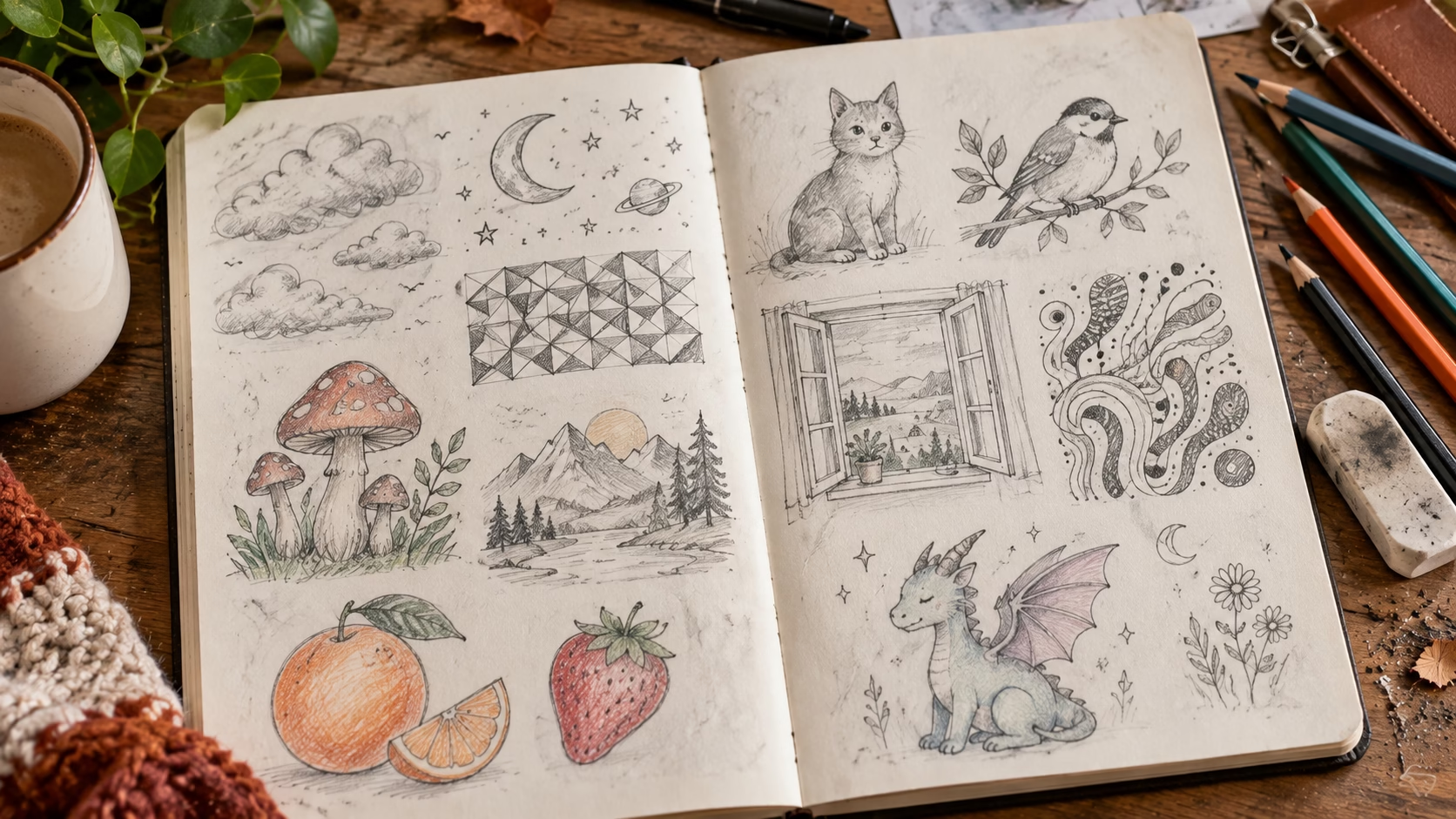
I don’t think you need to be naturally artistic to enjoy drawing. Sometimes all you need is a sketchbook, a pencil, and an idea simple enough to get you started.
When I’m looking for something easy to draw, I like subjects that don’t require perfect proportions or complicated techniques. Clouds, mushrooms, fruit, simple landscapes, patterns, and little fantasy creatures are all great because I can make them as simple or detailed as I want.
These 10 easy sketchbook drawing ideas are designed to help you practice without putting pressure on yourself to create a perfect drawing. Some focus on observation and basic shapes, while others are simply there to let you relax and play with your imagination.
Quick Answer

Some of the easiest sketchbook ideas for beginners include clouds, celestial doodles, geometric patterns, mushrooms, minimalist landscapes, fruit, simple animals, window scenes, abstract doodles, and fantasy creatures. You can make all of them with basic supplies such as a pencil, eraser, pen, or colored pencils.
Why Simple Drawings Are a Great Place to Start
Starting with simple subjects isn’t about avoiding real drawing practice. It’s actually a good way to build it.
When I draw a cloud, a piece of fruit, or a simple animal, I can concentrate on the basics: noticing shapes, controlling my lines, adding light and shadow, and understanding how different parts fit together.
Simple subjects also take away some of the pressure. There’s no need to spend an hour trying to make one drawing perfect. I can experiment, make mistakes, turn the page, and try again.
10 Easy Sketchbook Drawing Ideas

1. Cloudy Daydreams
Clouds are one of my favorite subjects when I want an easy drawing with very little pressure. There isn’t one correct shape, so I can experiment with fluffy cumulus clouds, wispy streaks, or darker storm clouds.
Try drawing a few overlapping clouds and add gentle shading underneath each one. Using the side of your pencil can create softer shadows without needing complicated techniques.
Try this: Draw the same cloud three times, changing the size and shading each time.
2. Celestial Doodles
Stars, moons, planets, and little constellations are perfect when I want something decorative that comes together quickly. Most of the shapes are simple, so I can focus on arranging them across the page.
Start with a crescent moon, scatter different-sized stars around it, and add a small ringed planet or constellation. You can keep everything in black and white or add colored pencils for a little more detail.
Best for: A quick drawing that looks finished without requiring much detail.
3. Geometric Patterns
If I want to relax while drawing, repeating patterns are one of the easiest things to reach for. Start with triangles, squares, circles, or hexagons and repeat them across the page.
Once you have the basic pattern, fill sections with dots, stripes, crosshatching, or solid shading. The repetition gives you something simple to focus on while also helping you practice steady lines.
My tip: Don’t rush. Slow, deliberate lines usually give you a cleaner pattern than trying to finish the page quickly.
4. Whimsical Mushrooms
Mushrooms are wonderfully easy to simplify. Start with a rounded cap and a simple stem, then add spots, stripes, tiny windows, or little doors.
You can draw one mushroom on its own or create a whole little forest with different shapes and sizes. This is also a fun place to mix realistic details with imagination.
If you enjoy creative hands-on projects, you might also like these summer crafts and DIY ideas for kids.
5. Minimalist Landscapes
You don’t need dozens of details to draw a landscape. A horizon line, a few hills, one tree, and a sun or moon can be enough to create a complete scene.
I like this idea when a blank page feels overwhelming because it encourages me to think about what I can leave out rather than what I need to add.
Try this: Draw a landscape using no more than 10 lines. Then see if you can add one small detail that changes the entire scene.
6. Fruit Sketches

Fruit makes an excellent drawing subject because the basic shapes are easy to recognize. An orange is roughly a sphere, a lemon is an oval, and a strawberry can be built from a simple heart-like shape.
Place a piece of fruit in front of you and pay attention to where the light hits it and where the shadow falls. That small exercise can teach you a lot about shading and observation.
For a relaxing creative routine, you can pair this kind of observational drawing with these easy journaling ideas for beginners.
7. Simple Animal Shapes
Instead of trying to draw a detailed animal immediately, break it down into basic shapes.
A cat can start with circles and triangles. A bird can begin with an oval and a small triangle for the beak. Once the main shapes are in place, add the ears, eyes, paws, wings, or other details.
This approach makes animals much less intimidating and helps you understand their structure before worrying about details.
8. Open Window Views
Draw a simple window frame and turn whatever is outside into your own little scene. It could be a forest, mountains, a city, the ocean, or even outer space.
The window gives you an instant border, which makes composition easier. You can also change the scene depending on your mood or the season.
Beginner idea: Keep the window simple and spend most of your time drawing the view beyond it.
9. Abstract Patterns and Free-Flow Doodles
Sometimes I don’t want to draw anything recognizable at all. That’s when abstract doodling comes in.
Fill a page with flowing lines, circles, organic shapes, dots, symbols, or repeated marks. You don’t need a reference and there isn’t a finished picture you’re trying to match.
It’s a particularly nice option when I’m feeling creatively stuck because I can simply start making marks and see where they lead.
If you enjoy other visual, low-pressure creative activities, these vision board ideas to manifest your goals are another fun option.
10. Fantasy Creatures
Fantasy creatures are perfect when you want to stop worrying about whether your drawing is realistic. Combine features from different animals or invent something completely new.
Try a fox with butterfly wings, a tiny dragon, a creature with antlers, or a strange little animal that exists only in your imagination. You can start with basic shapes and build the creature from there.

Choose a Drawing Based on Your Mood
Sometimes choosing what to draw is harder than actually drawing it. When I’m not sure where to start, I use my mood as a guide.
| If You Feel… | Try… |
|---|---|
| Calm and want to relax | Geometric patterns or abstract doodles |
| Curious and want to practice | Fruit or animal shapes |
| Playful | Fantasy creatures or mushrooms |
| Overwhelmed by a blank page | Minimalist landscapes |
| Dreamy | Clouds or celestial doodles |
Simple Tips for Getting Better at Drawing
You don’t need to fill your sketchbook with finished masterpieces to improve. A few simple habits can make drawing feel much easier over time.
- Start lightly. Use gentle pencil pressure for your first lines so you can adjust the shape easily.
- Warm up first. Spend a minute drawing circles, lines, or loose shapes before starting your main sketch.
- Draw regularly. Ten minutes several times a week is more useful than waiting for a long free afternoon.
- Use real objects. Drawing something sitting in front of you helps train observation.
- Let messy pages exist. Your sketchbook is a place to practice, experiment, and make mistakes.
For more simple routines that can help you build consistent habits, take a look at these 7 simple morning routines for productivity.
Frequently Asked Questions
What is the easiest thing to draw for a beginner?
Clouds, geometric patterns, simple fruit, and basic mushrooms are all good starting points because you can create them with simple shapes and don’t need perfect proportions.
What supplies do I need for easy sketchbook drawings?
A pencil, eraser, and any sketchbook or notebook are enough to get started. You can add colored pencils, markers, or fine-liner pens later if you want to experiment.
How long should I draw each day?
Even 10–15 minutes is useful. The important thing is drawing regularly rather than waiting until you have hours available.
Can children use these sketchbook ideas?
Absolutely. Clouds, mushrooms, animals, celestial doodles, and fantasy creatures are particularly easy to adapt for children. For another collection of creative activities, see these fun, easy camping crafts for kids.
Should beginners use pencil or pen?
I recommend starting with pencil because you can erase and adjust your lines. Once you’re more comfortable, try a fine-liner pen for a different drawing experience.
What should I do if I don’t like my drawing?
Keep it. Not every sketch needs to be good. Looking back at older pages can actually help you see how much you’ve improved.
Conclusion

The best way to get comfortable with drawing is simply to give yourself permission to start small.
You don’t need complicated subjects, expensive supplies, or perfect technique. Pick a cloud, mushroom, piece of fruit, animal, pattern, or anything else from this list and spend 10 minutes putting it on paper.
Some pages will turn out better than others. That’s completely normal. Your sketchbook is where you get to experiment, make mistakes, and gradually discover what you enjoy drawing.
So grab your pencil, open to a blank page, and start with something simple. You might be surprised by how quickly one small drawing turns into a whole sketchbook.


